
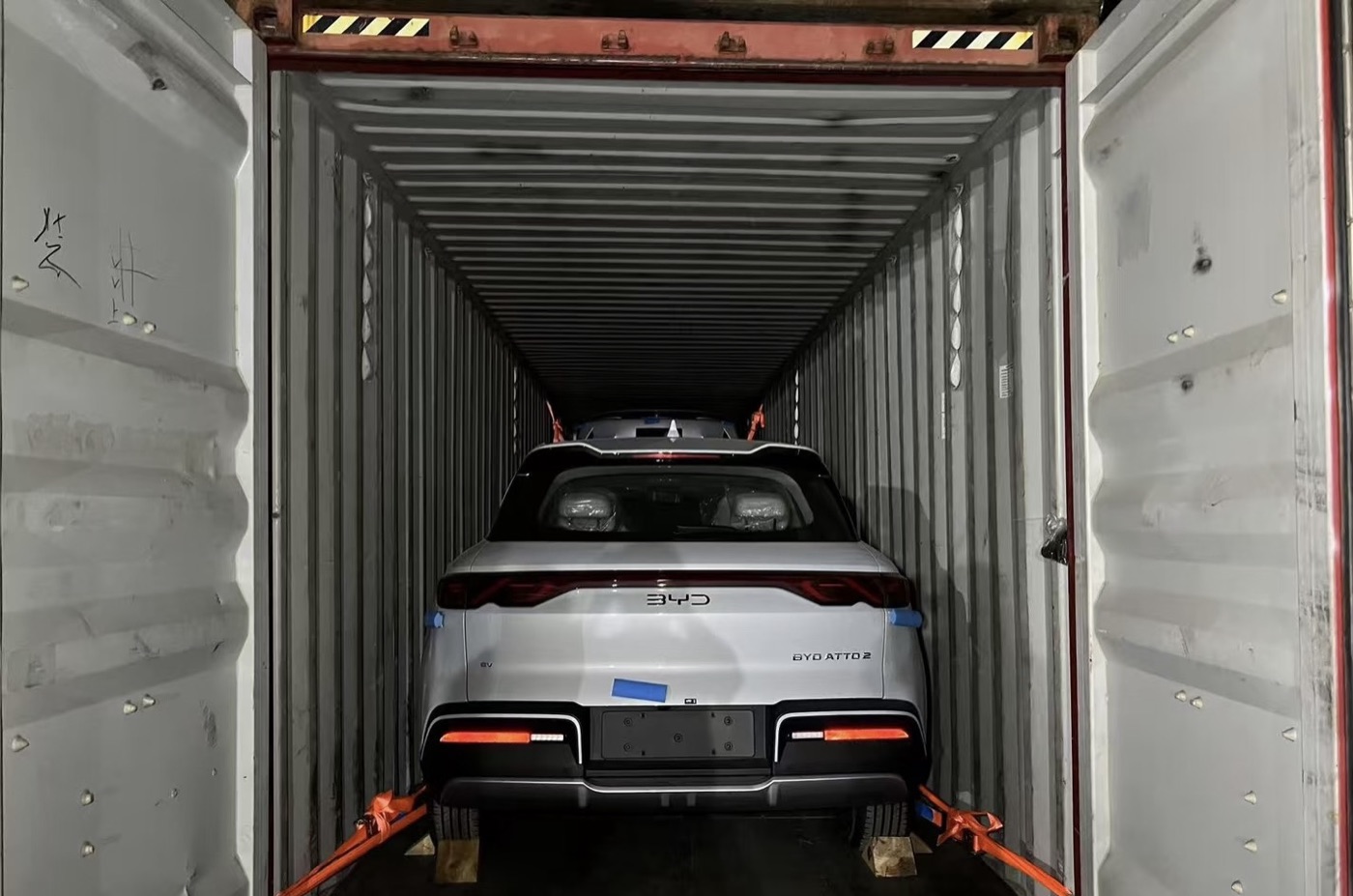
The short answer: a vehicle moving from China to Africa sails either as RoRo (driven onto the ship) or inside a container, takes roughly six to eight weeks quay to quay depending on routing and transhipment, and the ocean freight is usually the smaller half of what you actually pay — destination port charges, duty and clearing at the other end typically cost more than the sea leg itself.
That last point is what catches new importers. This guide breaks the journey into its parts so you can see where the money goes, and where you have leverage.
The route in plain terms
Most vehicles load at one of China’s main vehicle-handling ports — Shanghai, Ningbo, Shenzhen, Guangzhou/Nansha or Tianjin — and sail south through the South China Sea, across the Indian Ocean, and on to the African coast.
Two things follow from that geography:
There are few direct sailings. Most African bookings involve transhipment: your car is discharged from one vessel and waits for another. That wait is the single biggest source of variance in transit time, and it is why a carrier’s quoted “sailing time” and your actual quay-to-quay experience differ.
Routing has been unstable. Red Sea disruption has pushed a great deal of traffic around the Cape of Good Hope rather than through Suez, lengthening some services and reshuffling schedules. Any transit time you were given a year ago should be re-confirmed rather than assumed.
The main discharge ports
West Africa
| Port | Country | Notes for vehicle importers |
|---|---|---|
| Apapa & Tin Can Island (Lagos) | Nigeria | The region’s largest vehicle gateway. Highest volume and the deepest clearing-agent market — also the most congestion. Demurrage risk is real if documents are not ready before arrival. |
| Tema | Ghana | Modern expanded terminal, generally smoother handling than Lagos. Widely used as an alternative entry point for the region. |
| Cotonou | Benin | Historically a major vehicle hub, with a large share of arriving units onward-trading into neighbouring markets. |
| Lomé | Togo | Deep-water port and a significant transhipment hub for the region. |
| Abidjan | Côte d’Ivoire | Principal francophone gateway; capacity expanded in recent years. |
| Dakar | Senegal | Westernmost major port, shortest sea leg from European hubs. See our French-language Senegal guide. |
East and Southern Africa
| Port | Country | Notes for vehicle importers |
|---|---|---|
| Mombasa | Kenya | The main East African gateway, also serving Uganda, Rwanda and South Sudan inland. Note Kenya values vehicles against its own CRSP schedule rather than your invoice. |
| Dar es Salaam | Tanzania | Second major East African entry point, with inland corridors to Zambia, Malawi and the DRC. |
| Luanda | Angola | Principal Portuguese-speaking market in the region; documentation requirements are strict. |
| Durban | South Africa | Largest port on the continent — but note South Africa is right-hand drive, so Chinese LHD stock does not qualify for local registration. |
Choosing a port is not only about which is nearest your buyer. It is about clearing time, agent quality and inland cost from that port to where the vehicle is actually sold. A cheaper freight rate into a congested port can be erased by a fortnight of storage charges.
RoRo or container?
This is the first real cost decision, and the right answer depends on how many cars you are moving.
RoRo — the car is driven onto a dedicated vehicle carrier. You are billed by volume (CBM): a midsize sedan is roughly 12–13 CBM, a large SUV or pickup 15–16 CBM. One car, one bill.
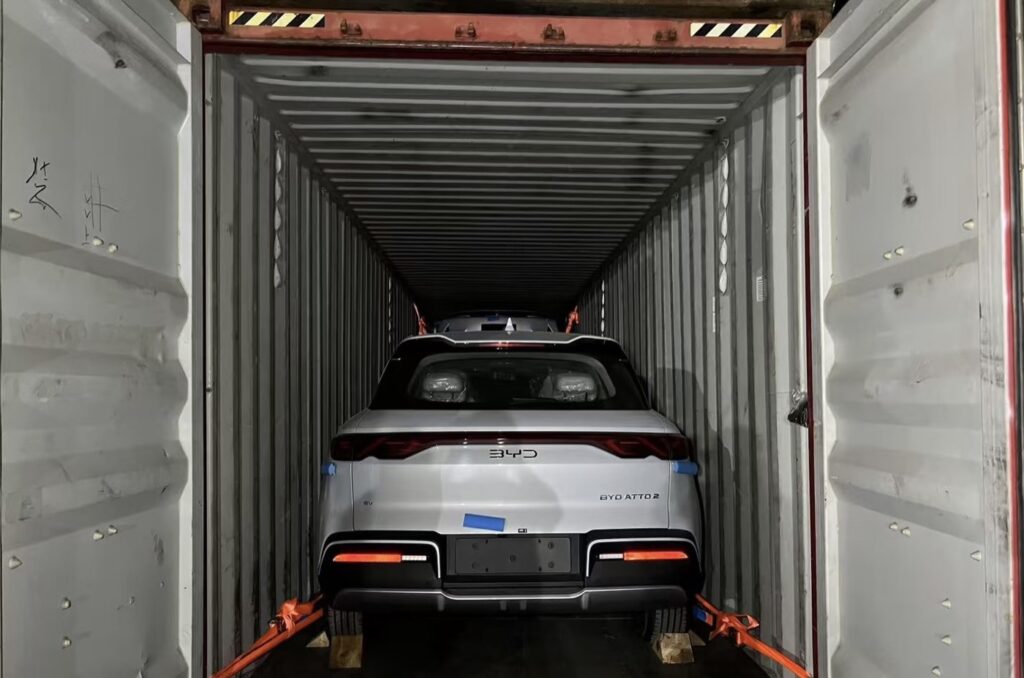
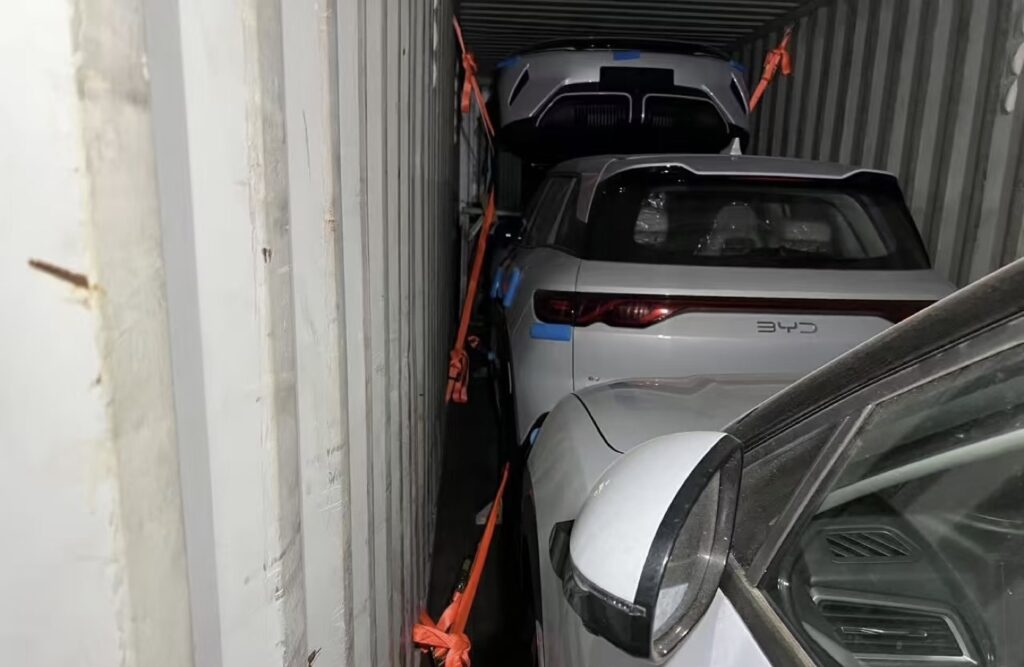
Container — the car is sealed inside a 40-foot high cube. You pay a flat rate for the box, then divide it by the number of cars inside. Two midsize cars fit comfortably; three smaller ones fit with proper bracing. With a steel racking frame that adds a second deck, the same box takes four — how many cars fit in a container walks through the loading method with photographs of an actual load.
| RoRo | Container | |
|---|---|---|
| One car | Usually cheaper | Usually more expensive |
| Two or three cars | More expensive per car | Usually cheaper per car |
| Protection from weather and theft | Exposed on deck | Sealed |
| Spare parts shipped alongside | Not possible | Yes — fill the empty space |
| Non-runners / damaged units | Generally refused | Possible |
| Port availability | Fewer services | Almost everywhere |
Two consequences worth planning around:
- Freight feeds your tax bill. African customs assess duty on CIF value, which includes freight and insurance. A cheaper shipping method lowers the freight invoice and the duty calculated on top of it. Consolidating three cars into one container can therefore save you money twice — see how the charges stack up in our Nigeria import guide.
- Container lets you ship parts. Unused space in the box can carry spares, tyres or accessories — often the difference between a thin margin and a decent one on a resale unit.
What you actually pay: the full cost stack
The ocean freight quote is one line out of nine. Budget for all of them:
On the China side
- Inland transport from the dealer’s yard to the loading port
- Export handling, documentation and customs formalities
- Ocean freight (RoRo per CBM, or the container rate)
- Marine insurance — check the insured value, not just that cover exists
On the destination side
- Terminal handling and port charges at discharge
- Import duty and levies on CIF value — usually the largest single item
- Clearing agent fees
- Storage or demurrage if clearance is slow
- Inland delivery from port to your yard
For a typical used car into Africa, items 5–9 commonly exceed items 1–4. Importers who budget only the freight quote are routinely surprised at the port.
On rates themselves: vehicle freight is quoted per booking by carriers and forwarders, not published on a public index. Anyone showing you a precise “live” figure for your exact car is showing you an estimate with the uncertainty hidden. Ask us for a current rate against your specific vehicle and discharge port, and we will tell you when it was quoted.
How long does it take?
Broad ranges, quay to quay, subject to routing and transhipment:
- China → Lagos / Tema / Cotonou / Lomé / Abidjan: commonly in the region of six to eight weeks
- China → Dakar: broadly similar, sometimes marginally longer depending on the hub used
- China → Mombasa / Dar es Salaam: often slightly shorter, as the Indian Ocean routing avoids the Cape
Add, at the front, one to two weeks for inland movement, export documentation and waiting for a suitable sailing; and at the back, however long clearance takes — which is where the range genuinely blows out. A prepared importer with documents pre-positioned can clear in days. An unprepared one can sit for weeks paying storage.
Confirm transit time with the carrier at the point of booking. Schedules in this trade have been volatile, and a range published in a guide is a planning figure, not a commitment.
Five things that go wrong, and how to avoid them
1. Documents arrive after the vessel does. The single most expensive mistake. Clearance cannot start without the original bill of lading and the document set. Storage and demurrage accrue daily from arrival, not from when you start work. Agree the document handover timeline when you place the order, not when the ship sails.
2. The declared value is challenged. Customs value against their own reference tables — Kenya’s CRSP schedule is an explicit example. An invoice that looks low triggers reassessment, and the car waits, accruing storage, while it is argued.
3. The vehicle is too old to clear. Maximum vehicle age is set by the destination country and enforced at the border, not negotiated at it. A car that fails the age rule is not a discount — it is a stranded asset. Check the current limit against the specific year of manufacture before buying. Nigeria, for instance, reformed its vehicle levies in July 2026 while keeping its age limit in place.
4. Insurance covers the invoice, not the loss. Under CIF the seller insures, frequently at minimum cover. If the vehicle is lost, you want the landed value back, not the invoice value. Ask for the policy terms.
5. The clearing agent is chosen at the last minute. Agent quality is the biggest controllable variable in destination cost. A good agent in a congested port outperforms a cheap agent in an easy one. Choose before the vessel sails.
Before you book anything: verify who you are buying from
Shipping planning is wasted if the vehicle or the exporter is not what you were told. Before you pay a deposit, confirm the supplier’s business licence covers vehicle export, that the corporate bank account name matches that licence, and that they will film your specific car showing VIN and odometer in one continuous shot. Our 9-point verification checklist walks through the whole process, and the dealer import guide covers the ordering sequence.
FAQ
How much does it cost to ship a car from China to Africa?
It depends on the vehicle’s size, whether you ship RoRo or container, and how many units you consolidate. The ocean freight is only part of it — terminal charges, duty on CIF value, clearing and any storage frequently exceed the sea freight itself. Send us the model and discharge port for a current quote against the actual unit.
How long does it take to ship a car from China to Lagos?
Commonly around six to eight weeks quay to quay, with transhipment the main source of variance, plus front-end documentation time and back-end clearance. Confirm the specific schedule at booking.
Is RoRo cheaper than container?
For a single car, usually yes. For two or three cars moving together, a shared 40-foot high cube is often cheaper per unit and protects the vehicles — and because duty is calculated on CIF, lowering the freight also lowers the duty.
Can I ship spare parts with the car?
In a container, yes — the unused space is usable and importers routinely fill it. With RoRo, no; loose items must be removed from the vehicle before loading.
Which port should I use?
Choose on total landed cost and clearance speed to your final market, not on the freight quote alone. Lagos has the deepest agent market and the most congestion; Tema, Lomé and Abidjan are widely used regional alternatives; Mombasa and Dar es Salaam serve East Africa and the inland corridors.
Do you handle shipping, or only the car?
We arrange the China side end to end — sourcing from partner dealers, export documentation, and booking the sea freight to your port. What we do not do is pretend a freight rate is fixed when it is not; you get the current rate at booking, in writing.
Next step
Tell us the model, the quantity and your discharge port. We will come back with what we hold in live stock — across BYD, Geely, Leapmotor, Toyota and Volkswagen, in SUV, sedan and EV form — a current freight rate for that routing, and the age and compliance position for your market. Get in touch, or read more about how we work and the services we cover. Dealers moving hybrids into West Africa may also want our note on hybrids for Nigeria and our roundup of export-ready Chinese models for 2026.
Destination rules decide what you can actually land. See our country guides for Ghana and Côte d Ivoire.