
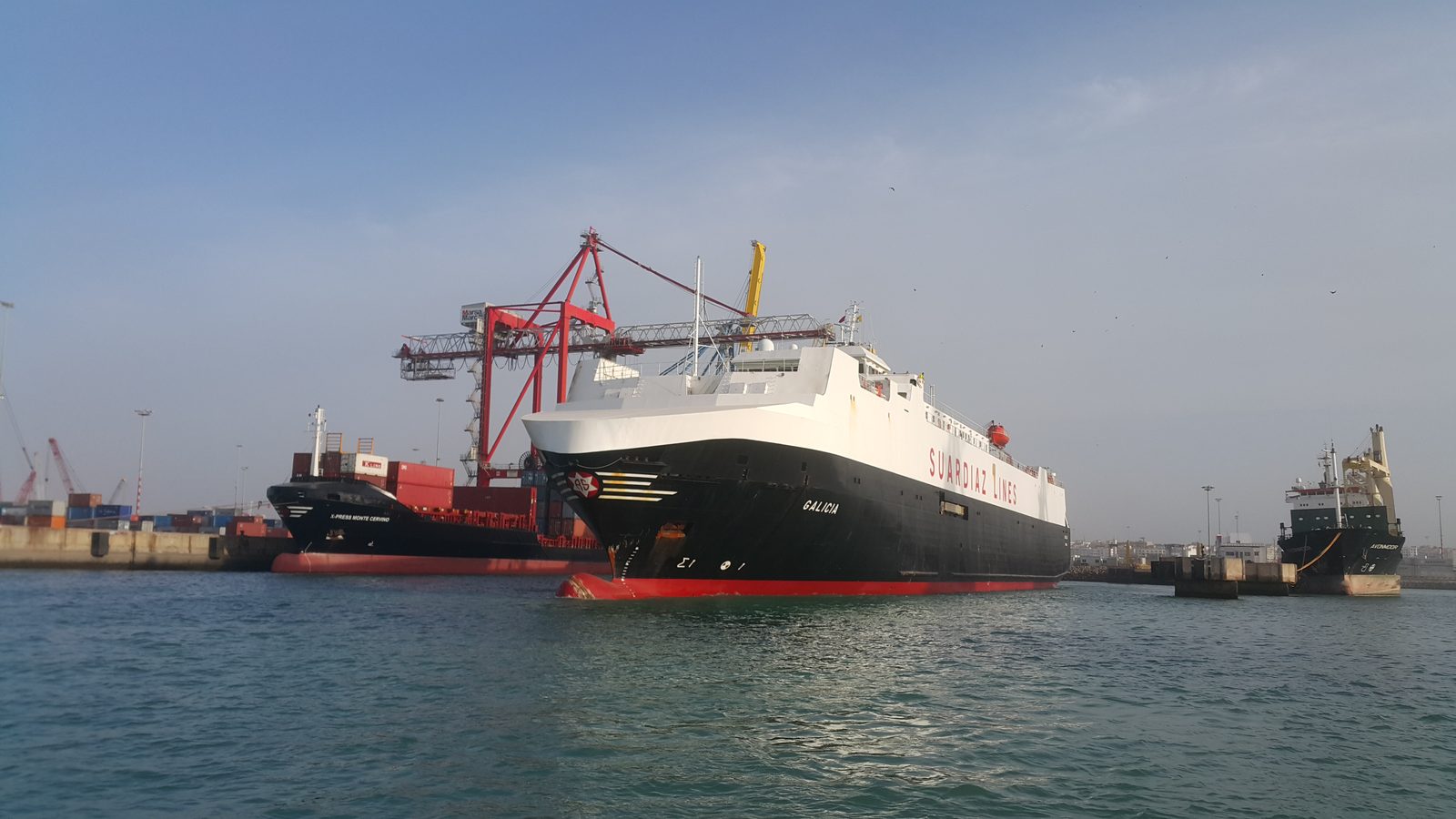
FOB, CFR and CIF all transfer risk at the same point: when the car is on board the vessel at the port of shipment in China. They differ in who books and pays the ocean freight, and in who buys the insurance. The costly mistake is to read a CIF price as a delivered price. The seller pays the freight, but the sea voyage remains your risk.
👉 Holding two quotes on different terms? Send both to us on WhatsApp · How to compare forwarder quotes line by line →
This guide explains the published Incoterms 2020 rules. It quotes no prices and no freight rates; those come from your supplier and forwarder. Where your sales contract or bill of lading says something different, the contract wins.
What do FOB, CFR and CIF mean when you buy a car from China?
FOB, CFR and CIF are three of the eleven Incoterms 2020 rules, and all three are written for sea and inland waterway transport. Each one names the point where the seller has delivered the car, and that point is the same in all three: on board the ship at the named port of shipment.
The differences sit in the two lines after delivery:
| FOB | CFR | CIF | |
|---|---|---|---|
| Full name | Free on Board | Cost and Freight | Cost, Insurance and Freight |
| Named place in the contract | Port of shipment | Port of destination | Port of destination |
| Delivery happens when | Car is on board the vessel | Car is on board the vessel | Car is on board the vessel |
| Risk passes to buyer | On board, at origin | On board, at origin | On board, at origin |
| Export clearance in China | Seller | Seller | Seller |
| Ocean freight | Buyer books and pays | Seller pays | Seller pays |
| Cargo insurance | Buyer’s decision | Buyer’s decision | Seller must buy cover |
| Destination port charges | Buyer | Buyer* | Buyer* |
| Typical use | Buyer has its own forwarder | Rare; buyer has its own insurance | One delivered-to-port number |
Destination terminal handling (*) is normally the buyer’s under all three terms. Under CFR and CIF it can move to the seller when the freight contract includes discharge, so the quote has to say which. Read the table by columns, not by the size of the number. A CIF quote contains the freight and insurance that an FOB quote leaves to you, so the two figures are not competing prices for the same package. The CIF Djibouti breakdown shows how a delivered-to-port figure is built for one corridor.
CFR is the term buyers ask about least, and it is easy to describe: it is CIF without the seller’s insurance duty. The seller still books and pays the freight to the destination port. You take the risk at loading and arrange your own cover.
Who books the vessel under FOB, CFR and CIF?
Under FOB you book the vessel, under CFR and CIF the seller does. That single difference decides who chooses the carrier, who controls the routing and who holds the contract of carriage.
Under FOB, you or your forwarder reserve the space and pay the ocean freight. You nominate the vessel and give the seller the vessel name, the loading place and the delivery window. The seller clears export and loads the car on board. The bill of lading is normally marked freight collect. If your vessel arrives late, the storage or waiting cost caused by that delay can land on your side, so put the nomination in writing and keep the loading window realistic.
Under CFR and CIF, the seller chooses the carrier and the route, pays the freight to the named destination port, and gives you shipping advice so you can take delivery. The bill of lading is normally marked freight prepaid. You get less say over transshipment, feeder services and sailing dates. On a route with unreliable space, that loss of control matters more than the admin you save.
This is why dealers with regular volume usually prefer FOB or FCA: they can use one forwarder across suppliers, consolidate cars, and keep the same insurance programme. A first-time buyer with one car often prefers CIF because there is one number and one party to chase. Neither choice is wrong; they solve different problems.
Where does risk pass under FOB, CFR and CIF?
Risk passes at the same moment under all three terms: when the goods are placed on board the vessel at the named port of shipment. It does not pass when the freight is paid, when the ship sails, or when the car reaches your port.
The UK customs guidance on Incoterms states it in the same words for FOB, CFR and CIF: the risk of loss or damage passes when the products are on board the vessel, and the buyer bears all costs from that moment. Before loading, the seller carries the risk. After loading, you do.
Two practical consequences follow.
First, the party who pays the freight is not the party who carries the risk. Under CIF the seller pays a freight bill that may cover six weeks of ocean, but the risk of those six weeks is already yours. If the vessel sinks or the car is damaged in a storm, the loss is yours to claim, not the seller’s.
Second, the exact handover point matters. For a RoRo shipment the car is driven onto the vessel, and “on board” is a visible moment. For a container shipment the container is usually handed to a terminal or depot days before the vessel loads it. The seller may have no control over what happens in that yard, yet FOB still places delivery “on board”. That mismatch is the reason the ICC recommends a different rule for containers, covered below.
Why does a CIF buyer still carry the risk of the voyage?
A CIF buyer carries the voyage risk because CIF is a cost rule, not a delivery-at-destination rule. The “C” in Cost, Insurance and Freight describes what the seller pays, not how far the seller’s risk travels.
If the ship sinks halfway, the seller has already delivered the car under the rule. The seller has delivered under the rule, and the loss does not automatically cancel your payment obligation. Your cargo insurance is the route to recovery. That is why the insurance certificate matters as much as the bill of lading in a CIF deal.
If you want the seller to carry the risk until the car reaches a named place, you are looking at a different group of rules, the D terms such as DAP or DPU. Those change the price basis and the seller’s exposure, and they are not what a normal CIF quote means. Do not assume a CIF quote includes delivery to your yard, your city or your border.
Risk and ownership are also separate questions. Incoterms allocate delivery, cost and risk. They do not decide who owns the car; that comes from the sale contract, the payment terms and how the bill of lading is made out. The bill of lading guide explains the document side.
What insurance does a CIF price include for a car?
A CIF price includes insurance that the seller buys for your benefit, but only at the minimum level. Under Incoterms 2020 the default cover for CIF is Institute Cargo Clauses (C), and the parties can agree to a higher level. The ICC’s own page on the 2020 rules confirms that CIF keeps Clause (C) as the default while the CIP rule moved to the broader Clause (A).
Clause (C) is the narrowest of the standard cargo covers. It is not an all-risks policy. Damage from handling, theft and non-delivery can sit outside it depending on the wording. The UK customs guidance puts the buyer’s position plainly: the seller is required to obtain only minimum cover, and a buyer who wants more must agree it expressly with the seller or make extra arrangements.
For a car, that gap is worth closing before loading. The marine insurance guide sets out the cover levels, the claim steps and the notice deadlines. The short version for this article:
- CIF: ask for the insurance certificate before shipment, check the clause level, the sum insured, the named port and the mode (RoRo or container), and confirm the policy is in your name or endorsed to you.
- CFR: the seller has no insurance duty. If you want cover, place it yourself; do not assume the freight invoice includes it.
- FOB: the same as CFR. Your forwarder can usually arrange cover, but the policy is your contract, not the forwarder’s.
Carrier liability is not a substitute for cargo insurance. It is limited by the applicable maritime rules and the carrier’s terms, and it is slow to pursue across borders.
Which term should you choose for RoRo, a container or one car?
The right term depends on how the car travels and how much control you want over the booking.
RoRo shipments fit FOB, CFR and CIF well. The car is driven on board, so the delivery point is real and visible. If you ship regularly, FOB with your own forwarder gives you the space allocation and the routing. If you buy one car and have no forwarder, CIF to the nearest working port is the simpler contract. The RoRo versus container guide covers the space and terminal differences, and the Nansha terminal guide shows how a Chinese RoRo gateway works.
Container shipments are the case where the traditional sea terms fit least well. In 2024 the ICC published guidance recommending FCA and CPT for containers through ports, with CIP where insurance is included. Its reason is the one above: FOB, CFR and CIF deliver on board, but a container is handed to the terminal before loading, and sellers have no practical control over terminal handling, stacking or rollovers. The guidance also points to double-charging of terminal handling charges as a common result. If your supplier insists on FOB for a container, name the terminal in the contract and state who pays origin terminal handling.
One car is usually a CIF decision for simplicity, but check two things before you accept it: what the destination port will charge you, and what the insurance actually covers. The single-car shipping guide covers consolidation and the alternatives.
Land routes to Central Asia are outside these three rules. FOB, CFR and CIF are sea and inland-waterway terms. A road movement through Khorgos needs an FCA, CPT or DAP contract instead; the Khorgos guide explains that route, and the Central Asia market guide covers what buyers are moving.
Electric and plug-in hybrid cars add a dangerous-goods declaration whatever the Incoterm. The term does not move that duty from one party to the other. The lithium battery shipping guide covers what the forwarder needs.
What should a car quote state besides the Incoterm?
A quote that says only “FOB” or “CIF” is not a price basis yet. It needs the named port, the edition of the rules, and the charges that sit on either side of the delivery point.
Ask for these in writing:
- The full term: “FOB Shanghai Incoterms 2020” or “CIF Djibouti Incoterms 2020”. A port name and the year remove most arguments later.
- Origin costs: export clearance, origin terminal handling, loading, and any documentation fee. Confirm which are inside the figure.
- Ocean freight: the sailing date, the route, whether transshipment is included, and how long the rate is valid.
- Destination costs: terminal handling at discharge, documentation, demurrage and detention. These normally sit with the buyer under all three terms.
- Insurance: the clause level and sum insured under CIF; who arranges cover under FOB and CFR.
- The cars: VIN list, inspection report, loading photos and the condition standard you agreed. Remote inspection before payment explains what to ask for.
- The unit: whether the figure is per car or per container, and how many cars fit.
The forwarder quote guide lists the line items in more detail, and the export documents checklist covers the paperwork that has to match the term.
How do FOB, CFR and CIF change the bill of lading and payment?
The Incoterm decides who contracts the carrier, and that shows up on the bill of lading. Under FOB the freight is normally collect and your forwarder is involved in the booking; under CFR and CIF the freight is normally prepaid and the seller’s forwarder issues the document.
Check four fields before you pay against documents:
- Shipper and consignee. The shipper is usually the seller or its forwarder; the consignee should be you or your order. The notify party must be someone who can act at the destination port.
- Freight notation. “Freight collect” on an FOB shipment and “freight prepaid” on a CIF shipment are the normal patterns. A mismatch with the contract is a question to resolve before the vessel sails.
- Port of loading and port of discharge. They must match the named places in the term. A CIF Djibouti contract with a bill of lading to another port is a different deal.
- Insurance certificate under CIF. It should travel with the other documents and be endorsed to you.
If you pay by letter of credit, the bank checks the documents against the credit, not against the commercial logic. An invoice that says FOB when the credit says CIF is a discrepancy, even if the goods and the money are otherwise fine. The LC versus T/T guide explains how the document set and the payment method interact.
What are the most common FOB, CFR and CIF mistakes buyers make?
The same mistakes appear in quote comparisons again and again.
- Comparing an FOB number with a CIF number. The FOB figure leaves out the ocean freight and insurance, so it looks lower. Put both quotes on the same basis before you compare.
- Treating CIF as delivered to the door. CIF ends at the named destination port. Terminal handling, customs, inland transport and demurrage are still yours.
- Assuming CIF insurance is all-risk. The default is minimum cover. If you want broader cover, agree it or buy your own.
- Forgetting destination charges. Demurrage and storage can exceed the line the buyer thought was included.
- Using FOB for a container without naming the terminal. The on-board point does not match the terminal handover, and terminal handling can be billed twice.
- Leaving out the port or the edition. “CIF” alone does not say where the seller’s freight duty ends.
- Assuming the party paying freight carries the risk. Under all three terms, risk leaves the seller at loading.
- Not matching the invoice to the letter of credit. A term mismatch is a documentary discrepancy.
A useful habit: before you sign, write one sentence in the contract that states the term, the named port, the edition, the insurance clause and who pays destination terminal handling. If the supplier cannot fill in all five, the quote is not ready to compare.
FAQ
Is FOB cheaper than CIF?
The FOB figure is normally lower because it excludes ocean freight and insurance. That does not make it cheaper. Add the freight, insurance and destination costs you will pay separately, then compare the totals on the same port pair.
Who pays for unloading at the destination port under CIF?
The buyer normally pays destination terminal handling and onward costs. The seller’s CIF obligation is to pay freight to the named port, not to unload and deliver the car. If the freight contract includes discharge, the quote should say so in writing.
Does CIF insurance cover the car to my warehouse?
The seller’s minimum CIF obligation ends at the named destination port. Your policy may continue to a final warehouse under its transit clause, but do not assume door delivery; check the named place and the transit period on the certificate before the car sails.
Can I use CIF for a car shipped in a container?
You can, but the ICC recommends FCA and CPT for containers through ports, with CIP where insurance is included. The on-board delivery point does not match container terminal operations. If you use CIF anyway, name the terminal and settle who pays terminal handling.
Under FOB, who handles export clearance in China?
The seller. FOB, CFR and CIF all place export clearance on the seller. Import clearance in your country is yours under all three.
What happens under FOB if my vessel arrives late?
You nominated the vessel. Storage or waiting costs caused by the late arrival can fall on you, so give the seller the vessel name and loading window in writing, and keep a margin in the schedule.
Do Incoterms decide who owns the car?
No. They allocate delivery, cost and risk. Ownership depends on the sale contract, the payment terms and how the bill of lading is made out.
Can you quote FOB or CIF for a car?
We can show you what a quote includes and help you compare two offers on the same basis. We are not a freight forwarder or an insurer, and we do not set freight rates. Send the model, quantity and destination port on WhatsApp.
Sources: ICC, “Incoterms® 2020” official page (11 rules; A9/B9 costs; CIF default cover Institute Cargo Clauses (C), higher cover optional; CIP requires Clause (A); CIF for maritime trade), checked November 2026. UK Government, “Customs valuation: Incoterms” (FOB/CFR/CIF definitions; risk passes on board; CIF cover is minimum only), checked November 2026. Rhenus, “Incoterms® 2020 quick reference chart” (export clearance, origin terminal, freight and insurance allocation; destination handling buyer or seller per the carriage contract; forwarder summary, not ICC), checked November 2026. ICC, “Incoterms® 2020 FCA and CPT: Best practice for shipping containers through ports” (Free_21032024, 2024): publication page checked; FCA/CPT recommendation, on-board mismatch and THC double-charge risk read in ICC Italia’s summary; full PDF not opened. FOB B10/B9 nomination and late-vessel costs confirmed in practitioner summaries; rulebook not opened. Steamship Mutual, “Carrier Beware – Transfer of Risk Not Title” (FOB risk, not title). RoRo and container background from our linked guides. No prices or rates quoted. Photo: Farid mernissi / Wikimedia Commons, CC BY-SA 4.0.