
Since 1 January 2026, a car exported from China through the used-car channel that was first registered 180 days or less before the export application needs an after-sales service confirmation letter (售后维修服务确认书) issued by the vehicle manufacturer. If the exporter cannot produce that letter, the local commerce authority will not issue the export licence, and the car cannot legally leave China on a used-car declaration. For an importer, the registration date printed in the Chinese vehicle registration certificate has become an eligibility test, not a detail to sort out later.
The rule is aimed at “zero-kilometre used cars” — new cars registered in China, often only to be exported immediately under a used-car licence. It does not ban used-car exports, and it does not apply to every used car. It applies to the youngest ones, and those are exactly the cars that many overseas buyers are offered at the sharpest prices.
This guide sets out what the notice says, which documents prove compliance, and what to put in the contract before a deposit leaves the bank. The general checks for any used car from China are in the used car import traps checklist; this article adds the export-rule layer.
👉 Checking a zero-km car quote from China? Send the registration certificate and licence details on WhatsApp · See the full export document list →
What is a zero-kilometre used car in China’s export trade?
A zero-kilometre used car is a vehicle that has already been registered in China — it has a Chinese plate, a registration date and a completed transfer-to-export procedure — but has covered only delivery mileage. Chinese traders also call these “plate-and-tax-included cars” (包牌包税车), because the first registration, purchase tax and plate are already settled. The car is then sold abroad as a used car.
The label is trade shorthand, not a legal category. Chinese export rules classify a car by its registration history, not the odometer. Once registered in China and exported under the used-car channel, it is a used car for export purposes even with 20 km on the clock. China’s licence regime applies on the Chinese side; the destination country’s used-vehicle rules apply on arrival.
Some are genuine trade-ins or cancelled orders. Others are often new cars a dealer registered to hit a sales target or release stock, then passed to an export company; that second group is what the 2025 notice targets.
What does China’s 180-day used car export rule actually say?
The rule is in the Notice on Further Strengthening the Management of Used Car Exports (《关于进一步加强二手车出口管理工作的通知》), document number 商贸函〔2025〕648号, issued jointly by the Ministry of Commerce, the Ministry of Industry and Information Technology, the Ministry of Public Security and the General Administration of Customs. It is dated 11 November 2025, was published on 14 November 2025, and took effect on 1 January 2026.
The operative paragraph says that, from 1 January 2026, for vehicles applying for export whose registration date is less than 180 days before the application — 180 days included — local commerce authorities must require the exporting enterprise to submit an after-sales service confirmation letter issued by the vehicle’s manufacturing enterprise. The letter must state the export destination country, the vehicle information and the after-sales service outlet information, and must carry the manufacturer’s official seal. Vehicles that cannot provide the material are not issued an export licence.
A transition clause covers vehicles already through the transfer-registration-pending-export procedure before the notice took effect, so existing contracts could be performed. It matters for older stock, not for a car you are ordering now.
The notice does not create a new licence for used cars. It adds a condition to the existing used-car export licence application. The licence itself is still issued by the local commerce authority, and the customs declaration still has to match it.
Which cars need the after-sales service confirmation letter?
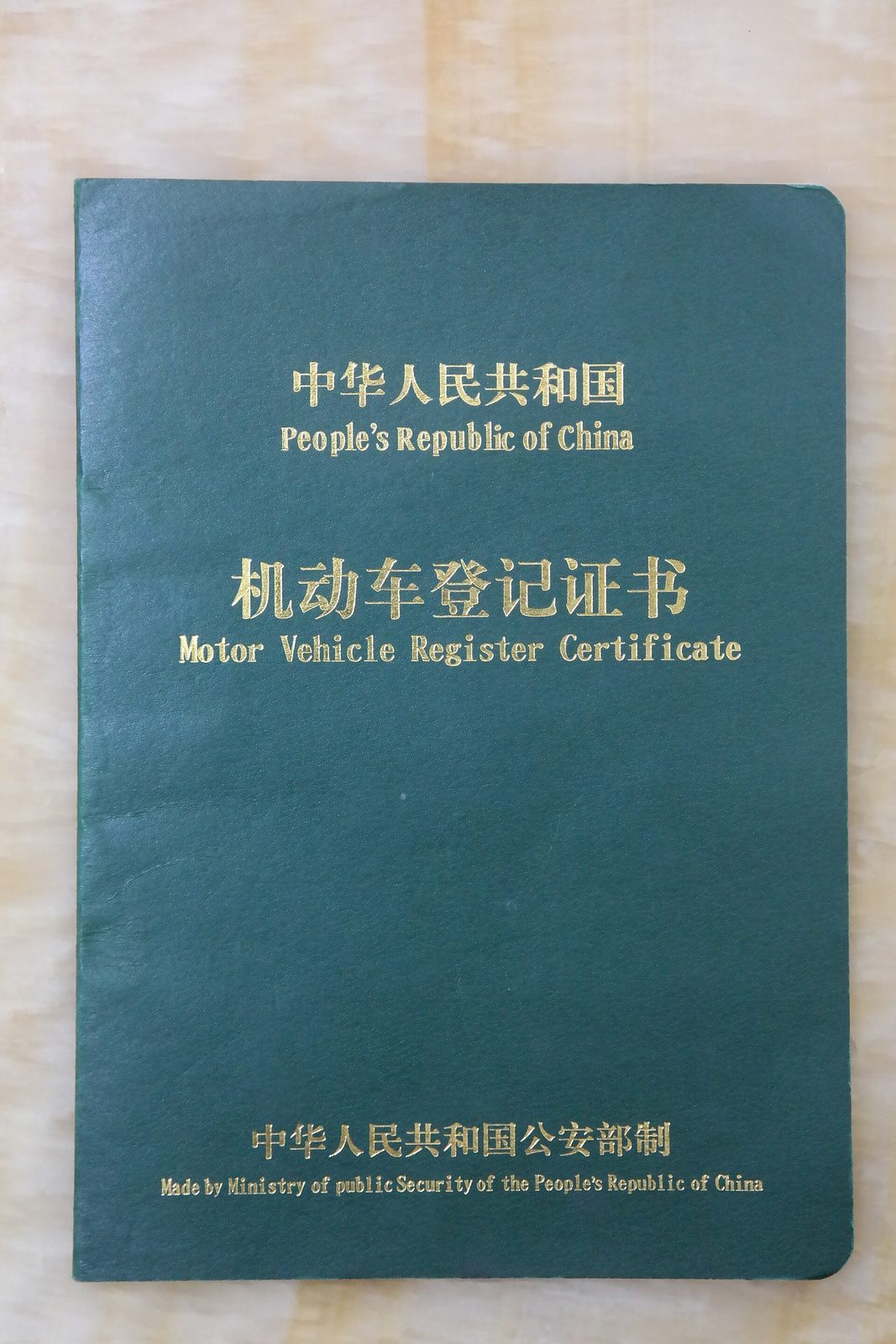
A car needs the letter when the gap between its first registration date and the date of the export application is 180 days or less. The clock starts on the registration date in the vehicle registration certificate (机动车登记证书), not on the manufacturing date, the invoice date or the date the exporter bought the car. A car built in 2025, first registered in March 2026 and offered for export in November 2026 is outside the 180-day window. A car built in 2025, registered in September 2026 and offered in November 2026 is inside it.
The test is applied at the licence application, not at sailing: a delayed ship does not move a car out of the window if the application was filed inside it.
Cars older than 180 days from first registration do not need this letter. They still need the normal used-car export documents: the registration certificate, the transfer-to-export record, the export licence and the customs declaration. The export documents checklist covers that set in detail.
What must the 售后维修服务确认书 contain?
The notice lists three content requirements and one formality:
- Export destination country. The letter names the country the car is being exported to. A letter issued for one market does not automatically cover a car redirected to another.
- Vehicle information. The car’s identity — VIN, model and the details that tie the letter to the unit — has to match the car being exported.
- After-sales service outlet information. The manufacturer states where the car will be serviced in the destination market: outlet names and contact details.
- The manufacturer’s official seal. A letterhead without the production enterprise’s seal does not meet the notice’s wording.
Two practical points follow. The letter is destination-specific: if you switch importer or destination country after it is issued, ask for a replacement naming the new destination, because the licence uses the destination on file. And the letter is a service commitment, not a factory warranty in your market. It tells you who should service the car, not what the service costs or whether parts are stocked. Ask the named outlet directly.
What happens if the seller cannot produce the letter?
Without the letter, the commerce authority does not issue the export licence, and without the licence the car cannot be declared for export through the used-car channel. The practical consequences for a buyer are straightforward:
- The car cannot ship on the planned date, and any deposit or balance already paid is exposed.
- A seller who promises to “sort out the licence later” is asking you to carry that risk.
- A seller who offers a substitute letter, a letter for a different car, or a letter without the manufacturer’s seal is offering a document that will not survive the licence check — and forged registration certificates and confirmation letters are named in the notice’s negative list of dishonest conduct.
- A car that is genuinely older than 180 days does not need the letter at all. If a seller cannot show a registration date, the problem is the missing certificate, not the missing letter.
Stop and verify the registration date before discussing price. If the car is inside the window and the letter does not exist, there is no compliant way to export that unit on a used-car declaration. Wait for a unit that qualifies, or choose a car outside the window.
How can a buyer verify the registration date and the export licence?
Verification is a document-matching exercise, and it can be done before payment. Ask for four things and compare them line by line:
1. The vehicle registration certificate (机动车登记证书). This green booklet, issued by the traffic management bureau, shows the first registration date in its registration summary (注册登记摘要信息栏) and records each transfer on later pages. Ask for a legible copy of both the first-registration page and the transfer-registration-pending-export entry. If the dates are cropped, ask again.
2. The export licence and its appendix. Brand, model, registration date and transfer-registration-pending-export date must match the registration certificate, with the two dates in the licence appendix. Compare the appendix with the certificate, not the seller’s summary.
3. The after-sales service confirmation letter, if the car is inside 180 days. Check the VIN, model, destination country and seal. The destination should be the country you will declare at import.
4. The VIN on the car itself. The VIN on the windscreen or door jamb should match the certificate, the licence, the commercial invoice and the bill of lading. A VIN mismatch is a stop signal for the whole deal, not a clerical matter.
If you cannot inspect the car in person, have the VIN and the documents checked remotely before paying. The process for that is in remote inspection before paying, and a visit to the yard is covered in inspecting cars in Guangzhou before buying.
What else did the November 2025 notice change?
The 180-day letter is the headline, but three other changes affect the paperwork a buyer will see.
Licence data must match the registration certificate. The notice requires the vehicle brand, model, registration date and transfer-registration-pending-export date to be filled in consistently with the registration certificate, and it says licences with missing or inconsistent data will not be issued. For a buyer, this is a useful cross-check: the dates on the licence appendix and the certificate should be identical.
Enterprises face dynamic management and an exit mechanism. The notice attaches a negative list of dishonest conduct and tells local authorities to supervise companies against it. Media summaries list seven categories, including forged registration certificates or confirmation letters and failure to honour quality-warranty obligations. Treat the list as a due-diligence tool.
Does the 180-day rule apply to new cars exported by manufacturers?
No. The notice governs used-car exports. A new car exported through the new-car channel by a manufacturer or an authorised exporter follows a different licensing route and does not need the after-sales service confirmation letter described here. The distinction is the export channel, not the condition of the car.
A car first registered in China and then sold abroad is still a used car for China’s export purposes, whatever the mileage. If you are offered a “new” car with a Chinese registration date, ask which channel the exporter will use and see the matching licence.
What are the risks of buying a zero-kilometre car as a used car?
The 180-day letter solves a licensing problem. It does not solve the commercial differences between a zero-km used car and a new car sold through the manufacturer’s own export channel.
- Warranty. A factory warranty issued in China is not automatically honoured in your market. The confirmation letter names service outlets; it does not promise free repairs. Ask the outlet what it will cover and what it will charge.
- Recalls and software. A car registered in China may need campaign work or software updates that the local dealer cannot perform. Confirm access to the manufacturer’s service system before you buy a batch.
- Destination classification. A car first registered abroad may be classified as a used vehicle in your market, whatever the odometer says. Age limits, inspection requirements and duty treatment can differ from a new-car import. Check the classification with your customs broker before you commit.
- Resale. A car with a prior foreign registration may be valued as used in your market even if it has never been driven, which affects the price you can ask.
What should an import contract say about the 180-day rule?
The contract should make the registration date a warranted fact and make the licence a condition of payment. Five clauses do most of the work:
- Registration date warranty. The seller states the first registration date and warrants that it matches the registration certificate. Attach a copy of the certificate to the contract.
- Documents before shipment. The seller delivers the export licence, the licence appendix and — where the car is inside 180 days — the after-sales service confirmation letter before the balance is paid and before the car is handed to the forwarder.
- Destination consistency. The destination country named in the confirmation letter and on the licence matches the country in your import declaration.
- Refund and delay terms. If the licence is refused, or the letter is not issued, the deposit is returned within a stated period and the seller bears the cost of the delay.
- Quality warranty. The seller states what after-sales support it will provide and who performs it in your market. Failure to honour quality-warranty obligations is named in the notice’s negative list.
Payment mechanics belong in the same negotiation. The letter of credit versus T/T guide explains how to tie payment to documents, and the FOB, CFR and CIF comparison explains where risk passes once the car is on the ship.
How does the rule change what buyers should expect to see in the market?
The immediate effect is documentary: offers for cars registered within the last six months should come with a manufacturer letter, and offers without one are incomplete. Supply of sub-180-day cars is narrower than before 2026, because a dealer cannot move a freshly registered car into export without the manufacturer’s cooperation.
That does not make every zero-km offer suspect: the rule lets a manufacturer issue the letter for a specific market, and some stock was already through the transfer procedure before the rule took effect. But a quote well below the prevailing export price for the same model deserves a document check before a deposit.
For broader export context, see the September 2026 China export data and the models drawing overseas demand in 2026.
What should an importer check before paying a deposit?
Run these checks in order. Each one produces a document you can keep in the shipment file.
- Get the registration certificate. Confirm the first registration date and the transfer-registration-pending-export entry. If the seller will not send it, stop.
- Count the days. Work from the planned licence application date. If the gap is 180 days or less, ask for the manufacturer’s after-sales service confirmation letter.
- Read the letter against the car. VIN, model, destination country, service outlets and seal. A letter for another VIN or another country is not your letter.
- Match the licence appendix to the certificate. Brand, model and both dates should be identical.
- Check the company. Use the export company verification guide and ask whether the company appears in any published negative-list or enforcement notice.
- Inspect or have the car inspected. VIN, odometer, condition and documents, before the balance is paid. See remote inspection.
- Agree the shipping and insurance file. RoRo or container, marine insurance, bill of lading release and port storage all affect the landed cost.
- Write the clauses into the contract. Registration date, documents before shipment, destination consistency, refund and warranty.
If the car is going to a Gulf market, the specification differences between a China-market car and a Gulf-spec car are a separate check: GCC spec versus China spec. For Ethiopia, the import rules and the used-vehicle classification are covered in importing electric cars to Ethiopia.
FAQ
Is a zero-kilometre car new or used under Chinese export rules?
A zero-kilometre car is used for Chinese export purposes once it has been registered in China and is exported through the used-car channel. The odometer reading does not change the classification. The registration date is what the 180-day rule counts.
Which date starts the 180-day clock?
The first registration date shown in the vehicle registration certificate (机动车登记证书). Manufacturing date, invoice date and the date the exporter acquired the car do not start the clock. The comparison is made against the date of the export licence application.
Can the after-sales service confirmation letter be issued after the car has shipped?
No for a compliant shipment: the letter is part of the licence application, and the licence is needed before export. A letter produced after the car has left China does not cure a refused licence. Treat it as a pre-shipment document.
Does the confirmation letter give me a factory warranty?
No. The letter identifies after-sales service outlets in the destination country and carries the manufacturer’s seal. It does not by itself promise free repairs or a warranty period. Ask the named outlet what it covers, and write the seller’s warranty obligations into the contract.
What if the car is older than 180 days?
A car first registered more than 180 days before the export application does not need the after-sales service confirmation letter. It still needs the registration certificate, the transfer-to-export record, the export licence and the customs documents. The rest of the used-car checks apply as normal.
Can I export a car that is registered in someone else’s name?
Used-car exports go through a transfer-registration-pending-export procedure, which records the car’s transfer for export. Check that the name on the registration, the licence and the invoice matches. An ownership chain that does not close is a title risk, not only a paperwork delay.
Is the 180-day rule still in force in 2026?
Yes. It took effect on 1 January 2026, and no amendment was found in the official and media sources checked in November 2026. The transition clause covers cars already through the transfer-to-export procedure before that date; it does not exempt cars registered afterwards.
Sources: The 180-day rule, the after-sales service confirmation letter (售后维修服务确认书) requirements — destination country, vehicle information, service outlet information, manufacturer’s seal — the refusal of the export licence when it is missing, the transition clause, the licence-data matching requirement and the negative list: Notice on Further Strengthening the Management of Used Car Exports (《关于进一步加强二手车出口管理工作的通知》), 商贸函〔2025〕648号, Ministry of Commerce, Ministry of Industry and Information Technology, Ministry of Public Security and General Administration of Customs, dated 11 November 2025, published 14 November 2025, read in full at wms.mofcom.gov.cn. The seven categories in the negative list, including forged registration certificates or confirmation letters and failure to honour quality-warranty obligations: search summaries of Shanghai Securities News (上海证券报) coverage, 15 November 2025, and Sina Finance, 14 November 2025; the attachment itself was not read; the figure comes from these summaries. No 2026 amendment was found in MOFCOM and Chinese media searches in November 2026. Photo: David290 / Wikimedia Commons, public domain. Photo: David290 / Wikimedia Commons, Public domain.