
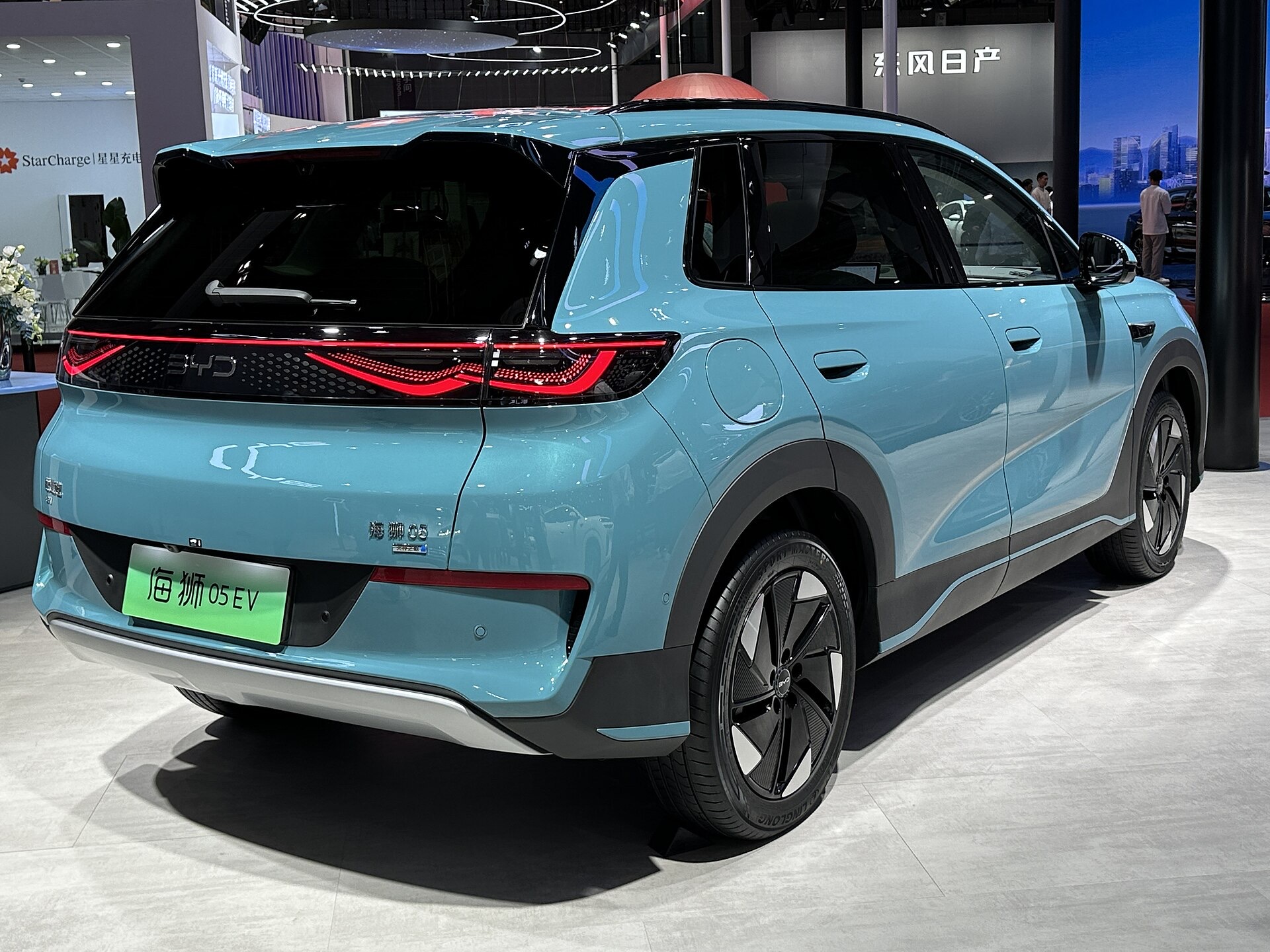
For a ride-hailing or taxi driver, the most important EV spec is not range. It’s how many kilometres the car adds per minute on a fast charger, because every minute charging is a minute not earning. On BYD’s rated figures, the Sealion 05 EV adds about 215 km of CLTC range in 18 minutes (30% to 80%). The Atto 3, Dolphin and Atto 2 add 200–255 km in about 30 minutes. For a driver who also needs five seats, a real boot and full safety equipment, our default recommendation is the Atto 3 510 km for all-round work and the Sealion 05 EV for drivers who depend on public fast chargers. The four-seat Seagull is the one we would not use for passenger work.
👉 Equipping drivers or a fleet? Atto 3 and Sealion 05 EV units are already in Djibouti, quoted CIF Djibouti. Ask us on WhatsApp · See the Djibouti stock →
What a working EV needs that a private EV doesn’t
A private owner in Addis Ababa might drive 40–60 km a day and charge overnight at home. Almost any EV works for them. A ride-hailing or taxi driver is different:
- High daily distance. A full shift can mean a full battery or more.
- Charging during the shift. Unless the driver can return to a depot charger, part of the day goes on public fast chargers. Public charging in Ethiopia is concentrated in Addis Ababa, with roughly 100 stations against an estimated 2,300 or more needed nationwide.
- Five seats and a usable boot. Airport runs need luggage space; group trips need a rear bench for three.
- Safety equipment that a fleet can defend. Curtain airbags and driver assistance vary by trim on the same model.
- Durability on mixed roads. Rear suspension type and tyre size affect ride comfort and running costs.
Before you buy for ride-hailing, check the platform’s and the city’s requirements, such as seat count, vehicle age and any licensing rules. We haven’t listed them here because they change and differ by operator.
Fast-charging: kilometres added per stop
This table uses BYD’s published figures: battery capacity, DC fast-charge peak and the rated 30%–80% charge time. “CLTC km added” is half the CLTC range, the share a 30%–80% charge restores. CLTC is a generous test cycle, so real-world kilometres will be lower, but the comparison between cars holds.
| Model and version | Battery | DC peak | 30–80% time | CLTC km added | km added per minute |
|---|---|---|---|---|---|
| Sealion 05 EV 430 km | 50.05 kWh | 130 kW | about 18 min | about 215 km | about 12 |
| Sealion 05 EV 520 km | 60.9 kWh | 156 kW | about 18 min | about 260 km | about 14 |
| Atto 3 510 km | 60.48 kWh | 80 kW | about 30 min | about 255 km | about 8.5 |
| Atto 3 430 km | 49.92 kWh | 70 kW | about 30 min | about 215 km | about 7 |
| Dolphin 520 km | 60.48 kWh | 80 kW | about 30 min | about 260 km | about 8.5 |
| Dolphin 420 km | 44.93 kWh | 60 kW | about 30 min | about 210 km | about 7 |
| Atto 2 401 km | 45.12 kWh | 65 kW | about 30 min | about 200 km | about 6.5 |
| Seagull 405 km | 38.88 kWh | 40 kW | about 30 min | about 200 km | about 6.5 |
Two cautions apply. A car charges only as fast as the charger allows: the Sealion’s advantage appears only on chargers that can deliver more than about 80 kW. And charging speed drops above 80%, which is why working drivers usually top up to 80% rather than 100%.
If your drivers charge overnight at a depot, the table matters much less. Every car on it starts the shift full. Then range and comfort decide.
Space, seats and safety
| Model | Seats | Length | Wheelbase | Boot | Rear suspension | Curtain airbags | Adaptive cruise, lane keeping, AEB |
|---|---|---|---|---|---|---|---|
| Atto 3 (430 / 510 km) | 5 | 4455 mm | 2720 mm | 434 L | Multi-link | All 2025 trims | All 2025 trims |
| Sealion 05 EV (430 / 520 km) | 5 | 4520 mm | 2720 mm | n/a on sheet | Five-link | All trims | All trims |
| Dolphin 520 km | 5 | 4150 mm | 2700 mm | 345 L | Multi-link | Yes | Yes |
| Dolphin 420 km | 5 | 4125 mm | 2700 mm | 345 L | Multi-link on most trims | Yes | Standard cruise only |
| Atto 2 401 km / 130 kW | 5 | 4310 mm | 2620 mm | n/a on sheet | Torsion beam | Yes | Yes |
| Atto 2 401 km / 70 kW | 5 | 4310 mm | 2620 mm | n/a on sheet | Torsion beam | Not listed | Yes |
| Seagull | 4 | 3780 mm | 2500 mm | n/a on sheet | Torsion beam | Yes | Some trims only |
Figures are from BYD’s 2025 configuration sheets (Dolphin: 2024 model year). “n/a on sheet” means BYD’s published sheet leaves the field blank. “Not listed” means the sheet shows the feature as absent on that version.
What stands out for passenger work:
- The Atto 3 and Sealion 05 EV share a 2720 mm wheelbase, the longest here, which is what gives rear passengers legroom. The Atto 3’s 434 L boot is the largest figure BYD publishes for these cars.
- The Dolphin is a hatchback with a 345 L boot. It’s fine for city trips, tighter for airport runs with several suitcases.
- Check the Atto 2 version. The 401 km car comes with a 70 kW or a 130 kW motor, and BYD’s sheet lists curtain airbags only on the 130 kW version. For a fleet, that line decides it. See BYD Atto 2 versions compared.
- The Seagull seats four. Many ride-hailing platforms and taxi rules expect five seats. Check before buying, and assume the Seagull is a city runabout, not a passenger car for hire. See Dolphin vs Seagull.
Our picks
1. All-round ride-hailing and taxi: Atto 3 510 km. Five seats, the largest published boot, multi-link rear suspension, curtain airbags and driver assistance on every 2025 trim, and 255 km of CLTC range added per 30-minute fast charge. The 510 km battery gives a full shift with margin. See Atto 3 430 km vs 510 km. In stock in Djibouti.
2. Drivers who rely on public fast chargers: Sealion 05 EV. About 18 minutes from 30% to 80% on a fast enough charger, against about 30 for the others. Over two top-ups a day, that’s around 25 minutes more working time per shift. Rear-wheel drive and a 4.65 m turning radius help in tight city streets. See Sealion 05 EV vs Atto 3. The 430 km version is in stock in Djibouti.
3. Lower budget, five seats: Atto 3 430 km or Atto 2 401 km / 130 kW. The Atto 3 430 keeps the Atto 3’s space and safety equipment with a smaller battery. The Atto 2 130 kW is smaller and cheaper, with curtain airbags and driver assistance. Avoid the 70 kW Atto 2 for fleet work. See Yuan UP vs Yuan Plus (Atto 2 vs Atto 3).
4. City-only, light passenger work: Dolphin 420 km. Five seats and a sensible price, but a 345 L boot and no adaptive cruise, lane keeping or AEB on the 420 km trims. The Dolphin 520 km adds those features and a 150 kW motor.
Not for passenger work: Seagull. It’s a good private city car, but four seats and a 130 km/h top speed rule it out for most hire work.
For larger vehicles, such as executive or family hire, see Sealion 06 EV vs Song Plus EV, with up to 710 km and 605 km of CLTC range respectively.
Altitude and running costs
Addis Ababa sits at around 2,355 metres. Petrol engines lose power as the air thins; electric motors don’t. A working EV in the highlands delivers its full rated output all day, which also matters on the city’s hills with a full load of passengers.
For running costs, the main variables are electricity price, distance and maintenance. EVs have no oil changes and fewer wearing parts than petrol cars. Tyres and brakes still wear, and high-mileage cars wear them faster, so budget for them. On the rated figures, these BYD models use between about 10 and 12.5 kWh per 100 km on CLTC. Multiply by your local tariff for a rough energy cost per 100 km, and add a margin for real-world driving and air conditioning.
Buying for a fleet: practical points
- Order by VIN, battery and motor, not by name. BYD names change between China and export markets: Yuan Plus is the Atto 3, Yuan UP is the Atto 2. See BYD China vs export names.
- Standardise on one model and version where you can. Shared spare parts, one set of training, one charger type. Browse current stock to see what is available in quantity.
- Avoid the common import mistakes listed in our checklist of traps when importing from China, and see shipping routes to African ports for orders from China.
- Check battery condition on any used or nearly-new unit. Our condition report covers what we document.
- Warranty is territorial. BYD’s Chinese warranty doesn’t automatically follow a car exported by an independent exporter. Plan servicing before the cars arrive.
- Know your landed cost. Our guide to CIF Djibouti pricing explains what the price covers and what’s left after the port. For the import rules, see importing electric cars into Ethiopia.
For bigger orders from China, see how many cars fit in a container, and before wiring any deposit, read how to choose a Chinese car exporter.
FAQ
What is the best electric car for ride-hailing in Addis Ababa?
For all-round work, the BYD Atto 3 510 km: five seats, a 434 L boot, curtain airbags and driver assistance on every 2025 trim, and about 255 km of CLTC range per 30-minute fast charge. For drivers who rely on public fast chargers, the Sealion 05 EV charges from 30% to 80% in about 18 minutes.
Which BYD EV charges fastest?
Of the models compared here, the Sealion 05 EV: up to 130 kW (430 km version) or 156 kW (520 km version), and about 18 minutes from 30% to 80%. The others take about 30 minutes.
Is the BYD Seagull good for taxi work?
Not for most passenger hire. It seats four, and many taxi and ride-hailing rules expect five. It suits private city driving.
How far can an Atto 3 go on one charge?
The Atto 3 is rated at 430 km or 510 km CLTC depending on battery. Real-world range is lower, especially at speed and with air conditioning. Plan a working day with a margin.
Do you have ride-hailing EVs in stock for Ethiopia?
Yes. Atto 3 (430 km and 510 km) and Sealion 05 EV 430 km units are already landed in Djibouti, quoted CIF Djibouti. Ask us on WhatsApp for current availability and fleet quantities.
Photo: JustAnotherCarDesigner / Wikimedia Commons, CC0.