
Short answer: Côte d’Ivoire runs one of the tightest age limits in West Africa. Under Décret n°2017-792 of 6 December 2017, an imported used passenger car may be no more than five years old, and a light commercial vehicle no more than seven. The clock runs from first registration in the country of origin, not from the model year and not from the build date. A vehicle that misses the line is refused at customs, with a penalty of XOF 2,000,000 plus the cost of re-exporting or destroying it. Of our 78 units in stock, 48 clear the five-year line.
That five-year rule is the single fact that should shape an Ivorian buying decision, and it is why a car that ships happily to Ghana next door may be turned away in Abidjan.
Quick answers
- Age limit? Five years for passenger cars, seven for light commercial vehicles.
- Measured from what? First registration in the origin country — a different clock from Ghana’s, which counts the manufacturing year.
- What if it misses? Refusal at customs plus XOF 2,000,000 and re-export or destruction costs. This is not a penalty you absorb and move on from.
- Left- or right-hand drive? Left. Côte d’Ivoire drives on the right, and all Chinese domestic stock is left-hand drive.
- How much of your stock qualifies? 48 of 78 units, all 2021 or newer.
The five-year rule, and the clock it runs on
Décret n°2017-792 of 6 December 2017 caps the age of imported used vehicles. Since 2025 the operative limits are five years for a passenger car (véhicule particulier) and seven years for a light commercial vehicle such as a van or pick-up. There are narrow exemptions, including for Ivorian diplomats and government employees returning from postings abroad, and a derogation has been issued at least once — so if your case is unusual, verify it rather than assuming.
The detail that catches importers is which date starts the clock. Côte d’Ivoire measures from première immatriculation, the first registration in the country of origin. Ghana, next door, measures from the year of manufacture. Those are not the same date, and on Chinese vehicles neither one reliably matches the model year printed in the listing.
On our own stock the gap is measurable: of the 54 units with a recorded build date, 18 carry a model year that does not agree with it. A car badged as a 2021 may have been built in late 2020 and first registered in 2021, or built in 2021 and registered in 2022. In Abidjan that distinction decides whether the unit lands.
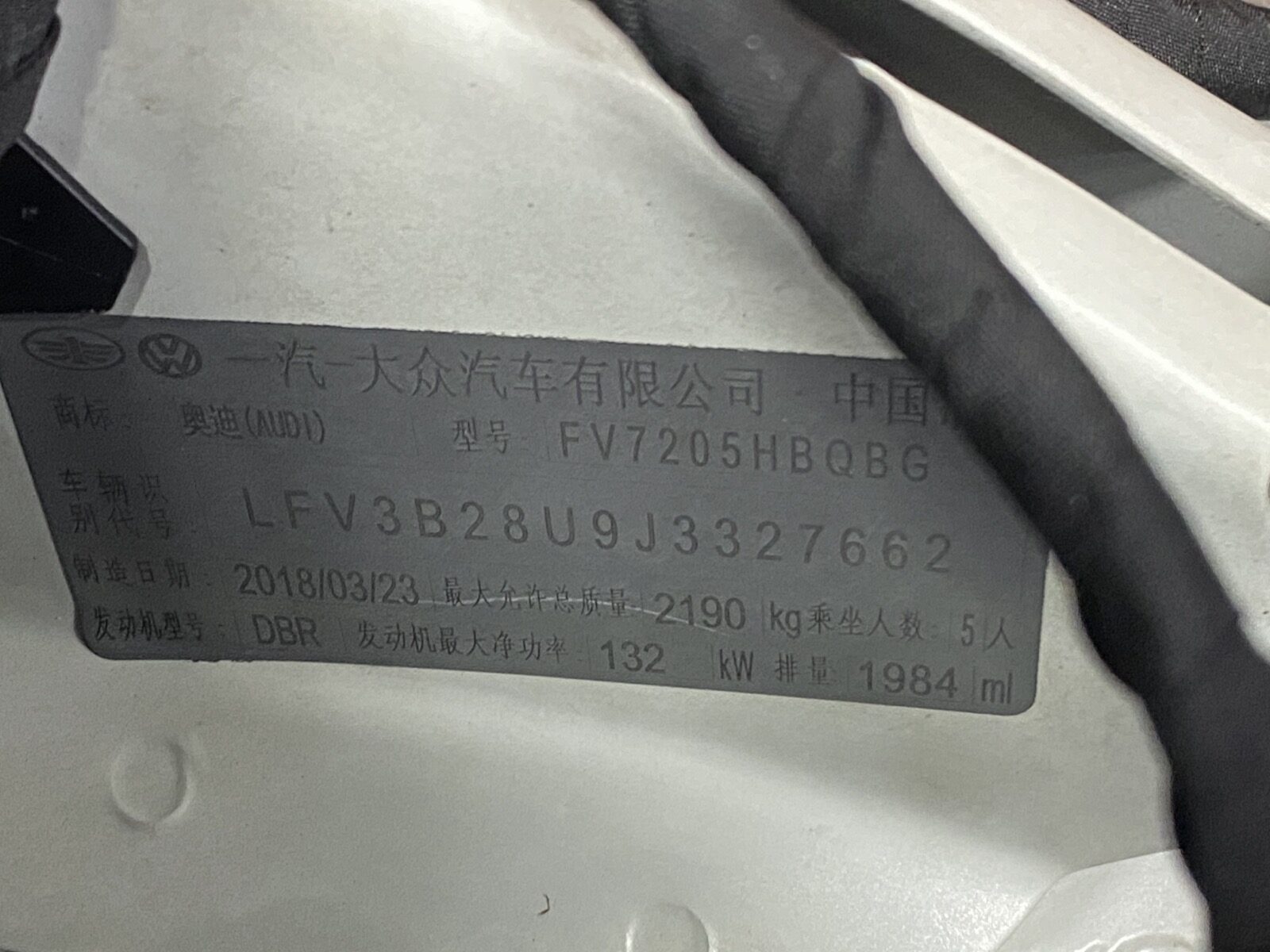
How to settle it before you buy: the tenth character of the VIN encodes the model year — P for 2023, R for 2024, S for 2025 — and the manufacturer’s plate carries the build month. Ask for both, plus the origin-country registration document. We publish the VIN on every unit we list. Our seven traps in importing cars from China walks through the decoding, and Chinese model names versus export names covers the related problem of one nameplate covering two different cars.
What in our stock clears the five-year line
For a 2026 arrival, the line falls at model year 2021. Here is what sits on the right side of it.
| Measure | Compliant stock |
|---|---|
| Units 2021 or newer | 48 of 78 |
| By year | 2021: 8 · 2022: 7 · 2023: 12 · 2024: 14 · 2025: 7 |
| Average mileage | 35,060 km (range 1,000–85,000) |
| Units with public FOB price | 17, from USD 6,400 to 24,500 |
| Declared free of flood / fire / major accident | All |
| VIN published | All |
Brand spread: BYD 9, Volkswagen 6, Toyota 5, Leapmotor 4, Jetour 3, BMW 3, then Changan, Cadillac, Honda, Wuling and GAC. By fuel: 18 petrol, 12 hybrid, 13 battery electric.
Note what the five-year rule does to the price band. Across all 78 units our published FOB prices run from USD 3,600 to 73,600; across the 48 that qualify for Côte d’Ivoire they run USD 6,400 to 24,500. The cheap end of the market is cheap precisely because it is old, and Côte d’Ivoire has legislated that end away. If your customers are shopping below roughly USD 6,000, Côte d’Ivoire is structurally the wrong market for them, not because stock is unavailable but because the law removes it.
Two disclosures we publish per unit rather than bury: within the 48, 11 have had bodywork and 20 have had repainting. That is normal wear on a used car and we record it openly. Also stated plainly: no unit currently holds a third-party inspection certificate. We can arrange one on request. What we do publish on every unit is set out in vehicle inspection and condition reporting.
Fit checks for Côte d’Ivoire
Drive side: correct. Côte d’Ivoire drives on the right and needs left-hand-drive vehicles, which is what all Chinese domestic stock is. This rules Chinese used stock in for the francophone West African bloc — Côte d’Ivoire, Senegal, Cameroon, Mali, Burkina Faso, Benin all drive on the right. It rules the same stock out for East African markets like Kenya and Tanzania, which drive on the left and need right-hand-drive units.
Electrified units are a real option here, with a caveat. Of the 48 compliant units, 12 are hybrids and 13 battery electric. That is an unusually high share, because the age limit skews the qualifying pool towards recent Chinese production, and recent Chinese production is heavily electrified. A hybrid works with no charging infrastructure at all. A pure EV needs a customer with somewhere to charge. Sell accordingly. The reasoning is set out for a comparable market in hybrids from China to Nigeria, and the segment overview is in top Chinese SUVs and EVs for export in 2026.
Fuel grade: check per model. Most of the qualifying petrol stock runs on regular grade, but some newer turbocharged Chinese models specify 95 RON, the Zeekr 8X and 9X among them, while the BYD Qin PLUS DM-i and Seal 05 DM-i take 92. Confirm against what your local stations actually retail.
What we will not tell you
We are not publishing Ivorian duty, VAT or customs valuation figures. Rates change, the valuation basis matters as much as the rate, and a stale percentage on an exporter’s site reads as authoritative when it is not. Get the current position from a licensed transit agent in Abidjan with the schedule in front of them.
What we will give you is an accurate FOB or CIF figure against a specific unit and port, which is the input your agent needs. And we will tell you when a unit does not qualify, before you pay, rather than after it is refused.
On the physical side, which does not change: freight is charged by the container rather than by the car, so consolidating matters. Our guide to how many cars fit in a 40ft container covers the loading maths, and shipping cars from China to African ports compares routes into West Africa. Electrified units carry lithium battery documentation that takes longer to assemble than a petrol car’s paperwork — start it at order.
How to order
- Filter by date first, model second. In a five-year market the age line is the binding constraint. Decide the cut-off, then look at cars.
- Ask for VIN, build month and origin registration date. All three, because the Ivorian clock runs on the last one. We publish the VIN on every unit.
- Confirm the current rule with your transit agent. Décret 2017-792 has been amended and derogated before.
- Send us the destination port and your budget band. We come back with qualifying units only, priced FOB or CIF, with a timeline.
We publish dedicated guides for neighbouring markets too: importing from China to Ghana, where the age line is ten years and measured differently, and Nigeria. For how this trade is structured and who you are actually buying from, see who really sells you a Chinese car and how to verify a Chinese car exporter. New to the process? The 2026 dealer guide covers it end to end. Model-level reading: the BYD Seagull, the Geely Coolray and the Jetour T2.
Frequently asked questions
What is the age limit for importing a used car into Côte d’Ivoire?
Five years for a passenger car and seven years for a light commercial vehicle, under Décret n°2017-792 of 6 December 2017. For a 2026 arrival that means a passenger car should be model year 2021 or newer. Narrow exemptions exist, including for returning Ivorian diplomats and government employees, and a derogation has been granted before, so confirm any unusual case.
Is the age counted from the model year or the build date?
Neither. Côte d’Ivoire counts from first registration in the country of origin. That is a different clock from Ghana’s, which uses the year of manufacture. On Chinese vehicles the model year, the build date and the first registration date often all differ — on our own stock, 18 of the 54 units with a recorded build date have a model year that disagrees with it.
What happens if a vehicle exceeds the age limit?
It is refused at customs. The penalty is XOF 2,000,000, roughly EUR 3,000, plus the cost of re-exporting or destroying the vehicle. This makes the age check something to settle before purchase rather than a risk to price in.
Does Côte d’Ivoire require left-hand drive vehicles?
Yes. Côte d’Ivoire drives on the right, so left-hand-drive vehicles are what is registrable, and all Chinese domestic used stock is left-hand drive. The same applies across francophone West Africa. East African markets such as Kenya and Tanzania drive on the left and need right-hand-drive units, which Chinese domestic stock cannot supply.
How many of your vehicles qualify for Côte d’Ivoire?
48 of our 78 listed units are 2021 or newer: 8 from 2021, 7 from 2022, 12 from 2023, 14 from 2024 and 7 from 2025. Average mileage across them is 35,060 km, and 17 carry a published FOB price between USD 6,400 and 24,500. All publish a VIN and all are declared free of flood, fire and major accident damage.
Why is the cheapest stock unavailable for Côte d’Ivoire?
Because cheap used stock is cheap largely because it is old, and the five-year rule removes it. Across all 78 of our units published FOB prices start at USD 3,600; across the 48 that qualify for Côte d’Ivoire they start at USD 6,400. If your customers are shopping below about USD 6,000, the constraint is the law rather than the supply.
Can Hanvia Motors confirm a vehicle qualifies before I pay?
Yes, and we would rather do that than have a unit refused in Abidjan. Send us your target segment and budget and we return only units that sit inside the five-year line, each with its VIN so you can verify the year independently. Third-party inspection is not held on any unit as standard but can be arranged on request.
Related: buying from Dubai versus direct from China, and Zeekr 9X five-seat vs six-seat.