
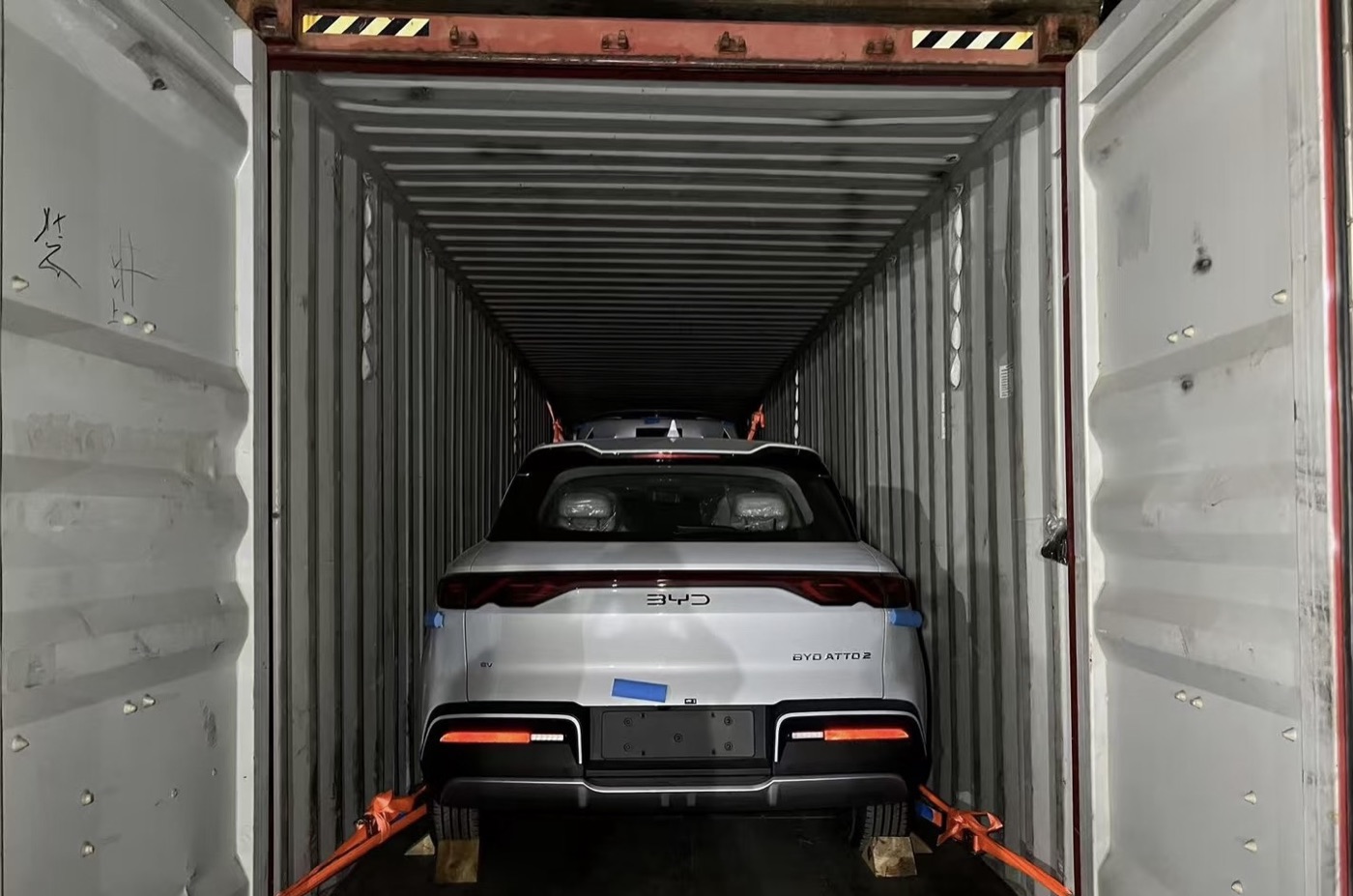
Three rule changes reshaped the Chinese car trade into Russia and Central Asia between late 2025 and 2026. From 1 January 2026, China requires a manufacturer’s after-sales confirmation before a car registered within the last 180 days can be exported as used, and pure-electric passenger cars need an export licence that only manufacturers and their authorised companies can apply for. On the import side, Russia’s recycling fee changed on 1 December 2025: only petrol cars up to 160 hp and 3.0 litres, imported by an individual for personal use, keep the low rate. Everything a dealer imports for resale pays the commercial rate.
For a dealer in Almaty, Tashkent, Bishkek or Moscow, the practical result is simple. The “zero-kilometre used car” shortcut is narrower. Pure EVs have to come through a licensed exporter. Engine power now decides the price of a car in Russia almost as much as the car itself.
👉 Tell us your destination city, the models you want and the quantity. We’ll confirm the current rules for that market with a licensed clearing agent and quote by Khorgos or by sea. Ask us on WhatsApp · See our Hongqi HS5 stock →
The three changes, side by side
| Change | Who set it | In force from | What it hits |
|---|---|---|---|
| 180-day rule for used-car exports | China: commerce, industry, public security and customs authorities, joint notice of 14 November 2025 | 1 January 2026 | Cars exported as used within 180 days of first registration. They need a stamped after-sales confirmation from the manufacturer, naming the destination country and service outlets |
| Export licence for pure-electric passenger cars | China: Announcement No. 54 of 2025 | 1 January 2026 | Passenger cars driven only by electric motors (HS 8703801090). Plug-in hybrids and range extenders are outside the literal scope because they carry an engine |
| Recycling fee reform | Russia | 1 December 2025, with indexation from 1 January 2026 | The low personal rate now depends on power: petrol up to 160 hp and up to 3.0 L; electric and range-extender cars up to 80 hp of 30-minute rated power |
None of these is a ban. Each one adds paperwork, cost, or both. Each one also punishes the buyer who finds out at the port rather than before the deposit.
China’s side: what can still leave easily
The 180-day rule and “zero-kilometre used cars”
For years a large share of Chinese cars reaching Russia and Central Asia were new cars registered in China for a few days and then exported as used. The reason was that a used car didn’t need the manufacturer’s export channel. The joint notice of 14 November 2025 targets exactly that. From 1 January 2026, a car exported within 180 days of its first registration must carry a confirmation from the manufacturer that it will provide after-sales service in the destination country. Without it, the car doesn’t get an export licence.
What that means for you:
- Freshly registered “used” cars of popular models are harder to source. Manufacturers have little reason to sign off on a parallel channel that competes with their own distributors in Kazakhstan or Uzbekistan.
- Cars older than 180 days from registration are outside this specific requirement. They are still used cars and still need the normal export paperwork.
- Unregistered stock is a different case. A car that was never registered in China, like our zero-kilometre Hongqi HS5 AWD units, isn’t a “registered within 180 days” car. Who files the export and on what licence should still be written into your contract.
Pure EVs need a licensed exporter
Announcement No. 54 of 2025 brought pure-electric passenger cars into China’s existing car export licence system from 1 January 2026. Only manufacturers and the companies they authorise can apply. A trading company with an ordinary import-export registration can’t apply for the licence itself.
This doesn’t stop EVs from leaving China. It decides who appears as the exporter on the declaration. When you buy a BYD or other EV through an intermediary, ask in writing which licensed company will declare the car. A plug-in hybrid such as the Qin PLUS or Seal 05 DM-i or the Zeekr 9X carries an engine and falls outside the literal wording of the announcement. It still goes through normal customs declaration.
Russia: the 160 hp line
Russia’s recycling fee (утильсбор) is paid on every imported car. Since 1 December 2025 there are two very different levels:
- Personal rate. For an individual importing a car for their own use: the reported figures are RUB 3,400 for a car up to three years old and RUB 5,200 for an older one. It only applies to petrol cars up to 160 hp and up to 3.0 litres. For electric and series-hybrid (range-extender) cars, the limit is 80 hp of 30-minute rated power. That is not the peak figure on the brochure.
- Commercial rate. Everything else. Every car imported by a company or sole trader for resale pays it, and so does any personal import above the power line. Russian media report rates in the hundreds of thousands of roubles for a 1.0–2.0 L car, rising steeply above 2.0 L. The rates are indexed each year from 2026.
For a dealer importing stock for resale, the personal rate isn’t available at all. Plan every unit at the commercial rate. The 160 hp line matters when your business is ordering a specific car for a private customer who imports it in their own name for their own use. In that case, the power figure recorded in the vehicle’s documents decides whether the customer pays a few thousand roubles or several hundred thousand.
Where some Chinese models sit against the 160 hp line, from the manufacturers’ published configuration tables:
| Model | Engine | Published output | Against the 160 hp line |
|---|---|---|---|
| Hongqi HS5 2.0T | 2.0 L turbo | 224 Ps / 165 kW | Over |
| Jetour T2 1.5T | 1.5 L turbo | 184 Ps / 135 kW | Over |
| Jetour T2 2.0T | 2.0 L turbo | 254 Ps / 187 kW | Over |
| BYD Qin PLUS DM-i / Seal 05 DM-i | 1.5 L + 120 kW motor | Engine 101 Ps / 74 kW | Hybrid: depends on how the power is recorded. Confirm first |
| Zeekr 9X | 2.0 L turbo + 2–3 motors | Engine 279 Ps; motors 660–1,030 kW | Over |
Two warnings from the Russian market:
- Hybrids are the grey zone. Russian brokers report that Chinese documents often show combined system power, and that combined figure is what customs may use. A plug-in hybrid whose petrol engine alone is far under 160 hp can still be charged at the commercial rate. Ask your broker how the specific model has been cleared before, before you promise a price.
- Ps and hp are treated the same for this rule. A car listed at 160 Ps is at the limit, not under it, and any rounding in the documents can push it over.
We don’t publish fee calculations, because the rates are indexed and the coefficients change. We confirm the current figure with a licensed broker for the specific car and the specific buyer before quoting a delivered price.
Central Asia: five markets, five directions
Kazakhstan and Kyrgyzstan are in the Eurasian Economic Union (EAEU) with Russia. Uzbekistan, Tajikistan and Turkmenistan are not. That one fact explains most of the differences.
| Country | Drive side | What changed or matters most | How firm our information is |
|---|---|---|---|
| Kazakhstan | Left-hand drive | EAEU technical rules. Tightened checks on cars brought in through other EAEU states. VAT rose from 1 January 2026 | Firm on drive side and EAEU status. Confirm tax figures with a broker |
| Uzbekistan | Left-hand drive | EVs have enjoyed a customs-duty exemption. EV and hybrid imports overtook petrol imports for the first time in 2024 | Firm on the trend. Duty bands for used cars are reported inconsistently |
| Kyrgyzstan | Left-hand drive | Long a re-export route to Russia for Chinese cars. Russia has since raised fees on cars first cleared elsewhere in the EAEU | Firm on the re-export pressure. Age limits are reported, not confirmed |
| Tajikistan | Left-hand drive | Strict age and emissions rules, but sources contradict each other on the exact cut-off | Unconfirmed. We check per order |
| Turkmenistan | Left-hand drive | The most restrictive market in the region | Unconfirmed. We check per order |
Kazakhstan
Kazakhstan is the largest market in the region and the closest to China by land, through Khorgos. As an EAEU member it applies the union’s vehicle technical rules: a vehicle safety certificate and an emergency-call system are part of registration. The authorities have also cracked down on cars that enter the union through a cheaper member state and then move to Kazakhstan. Clear the car for the country where it will be registered. Routing it through a neighbour to save on fees now tends to cost more than it saves.
Uzbekistan
Uzbekistan went electric faster than anyone in the region. EV and hybrid imports passed petrol imports for the first time in 2024, helped by a customs-duty exemption for EVs. Charging outside the big cities is still thin, so ask about the range-extender and plug-in hybrid versions for buyers outside the capital. Our comparisons of the BYD Yuan UP and Yuan PLUS and the Sealion 06 and Song PLUS EV cover the EV models we get asked about most.
Kyrgyzstan
Kyrgyzstan’s low import costs made Bishkek a transit point for Chinese cars heading to Russia. Russia has since raised fees on cars first cleared elsewhere in the EAEU, which narrows that gap. If you’re buying for the Kyrgyz market itself, the economics are fine. If the plan is onward sale into Russia, run the Russian numbers first.
Tajikistan and Turkmenistan
We’ve seen too many contradictory published versions of the rules for these two markets to print any of them as fact. Both are known for strict age and emissions requirements. Turkmenistan is widely reported to have additional restrictions on vehicle specification. Send us the exact model, year and trim, and we’ll confirm before you commit money.
Which Chinese cars make sense for this region
The climate, the roads and the fuel narrow the list more than the regulations do.
- Cold. Winters of minus 20°C and below cut battery range sharply and are hard on 12-volt batteries and tyres. Petrol and hybrid SUVs with all-wheel drive have the easiest life. Our Hongqi HS5 AWD winter guide lists what to replace before handover.
- Fuel quality. Many turbo engines specify 95 octane. Check that AI-95 is reliably available where the car will be driven, not only in the capital.
- Size and ground clearance. Mid-size SUVs sell. The Jetour T2 1.5T vs 2.0T and Jetour T2 vs Dashing comparisons explain the trade-off between a boxy mid-size SUV (front-wheel drive on the 1.5T, four-wheel drive on the 2.0T) and a lighter crossover.
- Premium demand. Large plug-in hybrid SUVs have a real market among wealthier buyers. See Zeekr 8X vs 9X, Zeekr 9X vs Lynk & Co 900 and Lynk & Co 900 five-seat vs six-seat. In Russia, remember that all of these sit far above the 160 hp line.
- Names. Many Chinese cars are sold under different names abroad. Our guide to Chinese model names vs export names stops you comparing the wrong two cars.
Getting the car there: Khorgos or sea
We run export operations at Khorgos, the land port on the China–Kazakhstan border. For Kazakhstan and the landlocked markets beyond it, a truck or rail leg through Khorgos is usually faster than sea freight to a distant port followed by a long inland transfer. For Russia, the route depends on the destination city.
Three things to agree before any deposit:
- The delivered price to your city, not just the price at the Chinese border. For inland markets the transport and clearance after China can be a large share of the total.
- Who declares the export and on what licence. For pure EVs this is now a legal question, not a formality.
- How payment will move. Payments between Russia and China have become slower and more heavily checked since 2024. We agree the route case by case before a car is allocated to you, so nobody is left waiting with a car at the border.
Every unit we offer comes with a condition report before you pay. Our guides to choosing a Chinese car exporter, how the export supply chain works and the traps that cost importers money cover the checks worth doing on any supplier, including us. New to buying from China? Start with the dealer’s import guide, or see how many cars fit in a container if you’re consolidating an order.
You can browse current stock, compare models side by side, or send an enquiry list with your segment, budget and destination.
FAQ
Can I still buy “zero-kilometre used” Chinese cars for Russia or Kazakhstan in 2026?
Yes, but with more paperwork. From 1 January 2026, China requires a manufacturer’s after-sales confirmation for any car exported within 180 days of its first registration. Cars registered longer ago than that, and cars that were never registered, are outside that specific requirement. They still need normal export paperwork.
Do Chinese electric cars need an export licence?
Yes. From 1 January 2026, pure-electric passenger cars need an export licence, and only manufacturers and their authorised companies can apply. Plug-in hybrids and range-extender cars carry an engine and fall outside the literal scope of Announcement No. 54 of 2025. They still go through normal customs declaration.
What is the 160 hp rule in Russia?
Since 1 December 2025, Russia’s low personal recycling-fee rate applies only to petrol cars up to 160 hp and 3.0 litres that an individual imports for personal use. For electric and range-extender cars, the limit is 80 hp of 30-minute rated power. Cars imported for resale pay the commercial rate whatever their power.
Which Chinese cars are under 160 hp?
Among the petrol SUVs we cover, none is. The Hongqi HS5 2.0T (224 Ps) and Jetour T2 (184 or 254 Ps) are over. Plug-in hybrids such as the BYD Qin PLUS DM-i have a small engine (101 Ps) but they depend on how their power is recorded in the documents, so confirm with a broker first.
Are right-hand-drive cars allowed in Central Asia?
Plan on left-hand drive for all five countries. All five drive on the right, and Kazakhstan restricts registration of right-hand-drive cars. Every car we offer for the region is left-hand drive.
How do cars get from China to Kazakhstan?
Most go overland through Khorgos, the land port on the China–Kazakhstan border, by truck or rail. We run export operations there. Ask us on WhatsApp for a delivered quote to your city.