
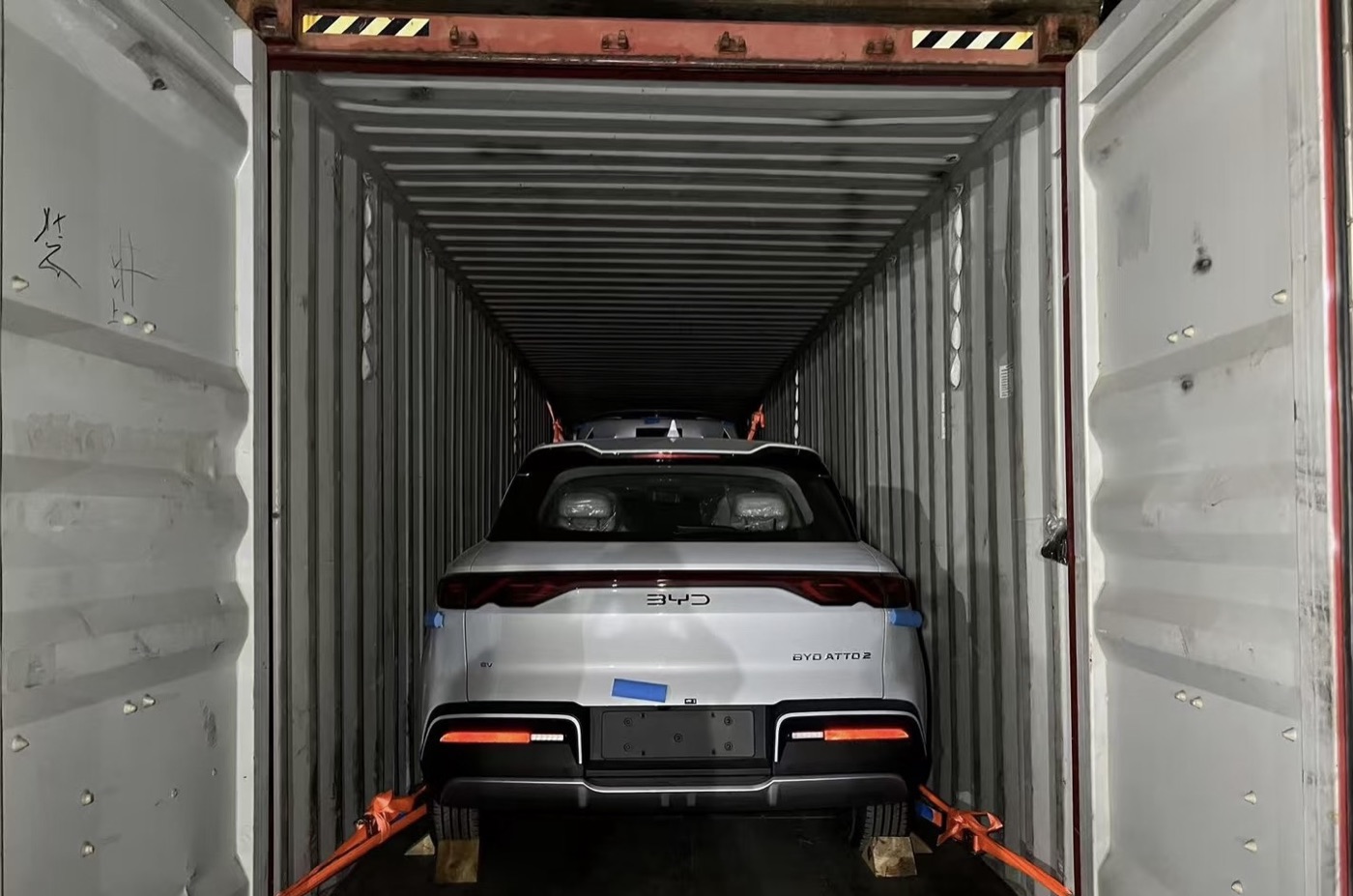
We send cars to Iran overland: from China’s Khorgos land port, across Central Asia, to the Iranian border. The cars leave China under the same 2026 export rules as every other market. Pure-electric passenger cars now need a licensed exporter, and a car registered in China within the last 180 days needs a manufacturer’s after-sales confirmation. On the Iranian side, the importer of record handles order registration and clearance. Import rules there have changed several times since the 2018 suspension, so they have to be confirmed for each order, not taken from an old article.
For an Iranian dealer, three questions decide whether an order goes smoothly. Who is the importer of record, and is the order registered before the car leaves China? Is the model a petrol car, a plug-in hybrid or a pure EV? That decides how it is declared in China. And are the documents prepared for an overland transit through several countries, rather than for a single sea crossing?
👉 Tell us the model, the quantity and the Iranian city you are delivering to. We’ll check the China-side export route for that model and quote overland through Khorgos. Ask us on WhatsApp · Read our Central Asia and Russia overview →
Why overland and not by sea
Most of the cars we export to Africa and Latin America go by sea, in containers or RoRo. Iran is different for us. We run export operations at Khorgos, the land port on the China–Kazakhstan border, and that is the route our Iranian orders take.
From Khorgos the cars travel overland across Central Asia to the Iranian border. The forwarder fixes the transit countries, the border crossing into Iran and the mode (truck or rail) for each shipment. Each transit country has its own transit paperwork, and the forwarder arranges it. What matters on your side:
- The documents have to match the car exactly, all the way. On an overland route the same papers are checked at several borders. A VIN typo or a colour that doesn’t match the invoice can stop a truck at the first transit border. A port would not even see it until arrival.
- Plan the delivery point as a city, not a port. Because the cars arrive by land, the quote we give you is to an agreed handover point. It is not to Bandar Abbas or any other port.
- Load planning is per truck or wagon, not per container. If you are used to thinking in container loads, our container loading guide still helps with the size logic. On the overland route, though, the unit is the truck or the rail wagon.
We don’t publish transit times or freight rates for this route. Both depend on the season, the border queues and how many cars move together. We quote them per shipment.
What changed on China’s side in 2026
Two Chinese rules came into force on 1 January 2026. They apply to cars for Iran exactly as they do to cars for Kazakhstan or Russia. Our Central Asia and Russia overview covers them in full; here is what matters for an Iranian order.
| Rule | What it says | What it means for an Iran order |
|---|---|---|
| 180-day rule (joint notice of 14 November 2025) | A car exported as used within 180 days of its first registration in China needs a stamped after-sales confirmation from the manufacturer | “Zero-kilometre used” cars of popular models are harder to source. Manufacturers rarely confirm service for a parallel channel |
| Pure-EV export licence (Announcement No. 54 of 2025) | Pure-electric passenger cars (HS 8703801090) can only be exported by manufacturers and the companies they authorise | Pure EVs can still go, but a licensed company must appear as exporter. Ask in writing who declares the car |
Neither rule is a ban. Both change who has to sign what, and both should be settled before you pay a deposit, not at Khorgos.
Plug-in hybrids and range extenders are outside the literal wording of the EV licence rule because they carry an engine. That is one of the reasons the plug-in hybrid section below matters for Iran.
What the Iranian importer has to handle
We are the exporter. The import side of the order belongs to your company in Iran, and it has to be in place before the car leaves China:
- Order registration. Imports into Iran are registered on the country’s comprehensive trade system (سامانه جامع تجارت) before shipment. The VIN, model, quantity and value on our documents have to match what was registered.
- Eligibility of the car. Which vehicles may be imported, whether new only or also used and zero-kilometre cars, and under which conditions, has changed several times since 2018. Get this confirmed by your customs broker for the exact model and model year before ordering. We don’t publish duty or age rules for Iran, because the figures circulating online are second-hand and change often.
- Standards and registration. Registration in Iran needs the vehicle to meet Iranian standards requirements. Your broker will know which documents the standards and registration authorities currently ask for. Send us that list, and we’ll tell you which items come from the manufacturer and which we can produce.
If you are new to importing from China in general, our step-by-step import guide for dealers covers the parts that are the same for every market. The used-car traps checklist covers the mistakes we see most often.
Payment and contracts
Payment terms, currency and the banking route are agreed per order. They have to comply with the rules that apply to both sides of the trade. We tell you before any deposit what we can and can’t accept for an Iranian order. If a route doesn’t work for us, we would rather say so on day one than after the car is bought.
Two contract points are specific to an overland order:
- Name the handover point and who carries the risk on each leg. On a sea shipment that is a port and an Incoterm. On an overland route through several countries, write down where responsibility changes hands.
- Write the declaring exporter into the contract. For a pure EV this is the licensed company; for anything else, it is still worth stating.
Petrol, plug-in hybrid or pure EV for Iran
The usual export argument for EVs, that charging is cheaper than fuel, is weaker in Iran than almost anywhere else. Petrol is heavily subsidised and among the cheapest in the world. Recent summers have also brought widely reported electricity shortages and scheduled power cuts. An Iranian buyer who chooses an electrified Chinese car is usually buying technology, refinement and features, not a lower running cost.
That points to plug-in hybrids and range extenders as the safest electrified choice. They run on cheap petrol when the grid is unreliable, drive on electricity in the city when it isn’t, and they sit outside the pure-EV export licence on the China side.
| Option | Strength in Iranian conditions | Watch out for | Where to start | ||
|---|---|---|---|---|---|
| Petrol | Cheap fuel, no grid dependence, simplest service | Engine output and emissions class need to match import rules | [[jetour-t2-1-5t-vs-2-0t-export | Jetour T2 1.5T vs 2.0T]] · [[geely-coolray-vs-coolray-lite-vs-new-coolray | Coolray versions]] |
| Plug-in hybrid / range extender | Petrol fallback during power cuts; outside the EV licence rule | Two drivetrains to service; check battery cooling for summer heat | [[byd-qin-plus-vs-seal-05-dm-i-export | Qin PLUS vs Seal 05 DM-i]] · [[zeekr-8x-vs-9x-export | Zeekr 8X vs 9X]] |
| Pure EV | Most refined, lowest maintenance | Needs a licensed exporter in China; depends on home or fleet charging | [[byd-sealion-06-vs-song-plus-ev-export | Sealion 06 vs Song Plus EV]] · [[byd-yuan-up-vs-yuan-plus-export | Yuan UP vs Yuan Plus]] |
Large SUVs and flagships
The Zeekr 8X and 9X are the two flagships of the same brand, and the 9X’s 279 Ps engine means it is never short of petrol power. The Zeekr 9X vs Lynk & Co 900 comparison explains why two cars of the same size are priced and built so differently. If you’re choosing seat layouts, read Zeekr 9X 5-seat vs 6-seat and Lynk & Co 900 5-seat vs 6-seat before quoting a family buyer.
Mid-size SUVs
The Jetour T2 and Jetour Dashing cover the boxy off-road look and the urban crossover. The T2 is published at 184 Ps for the 1.5T and 254 Ps for the 2.0T, and the 2.0T is the four-wheel-drive version. For a buyer who wants a premium badge in a petrol SUV, the Hongqi HS5 at 224 Ps is the one we hold as zero-kilometre stock. The HS5 AWD adds four-wheel drive for mountain routes.
Sedans and small cars
The BYD Qin PLUS DM-i and Seal 05 DM-i pair a 101 Ps engine with a 120 kW motor. They are a good way into plug-in hybrids at a sedan price. For city cars, our Dolphin vs Seagull comparison explains the size gap between two models that are often confused. Both are pure EVs, so the licensed-exporter question applies.
Order by VIN, version and battery size, never by model name alone. Chinese model names and export names often differ. Our guides to Chinese and export model names and BYD’s China and export names list the common mix-ups.
What we send with every car
For every unit we export, we prepare the standard China export documents. For used units, we add a condition report: VIN, mileage, month of manufacture and any flood, fire, accident or repaint history, published before you pay. On an overland route the checks repeat at every border, so the VIN on the car, on the invoice and on the export declaration must match before the car leaves China. Ask any exporter, including us, to show you that check.
What we don’t do is promise an import outcome in Iran. We can’t guarantee clearance or registration on the Iranian side. Your importer and broker own that part. What we can do is make sure nothing on our side of the paperwork gives them a reason to stop the car.
If you are comparing exporters, our page on what to check before trusting a Chinese car exporter lists the questions we would ask in your place, including about us. For a wider view of the models we ship, see top Chinese SUVs and EVs for export in 2026.
👉 Send us the model and the delivery city in Iran. We’ll confirm the China-side route for that exact car and quote overland through Khorgos. Ask us on WhatsApp
FAQ
Do you ship cars to Iran by sea?
Our Iranian orders go overland, through the Khorgos land port on the China–Kazakhstan border and across Central Asia to Iran. The forwarder fixes the transit route, the border crossing and the mode, truck or rail, for each shipment.
Can I import a pure-electric Chinese car into Iran?
On the China side, yes, but since 1 January 2026 a pure-electric passenger car must be exported by a manufacturer or a company it authorises. Ask in writing which licensed company will declare the car. Whether a given EV can be imported and registered in Iran has to be confirmed by your customs broker for that model.
Are plug-in hybrids affected by China’s EV export licence?
The licence rule covers passenger cars driven only by electric motors. Plug-in hybrids and range extenders carry an engine and fall outside its literal wording. They still go through normal export declaration.
Can I buy a “zero-kilometre used” car for Iran?
Only if the paperwork works. Since 1 January 2026, a car exported as used within 180 days of its first registration in China needs the manufacturer’s after-sales confirmation. Never-registered stock is a different case. Whether Iran accepts the car is a separate question for your broker.
What does the Iranian importer need to do before shipment?
Register the order on Iran’s comprehensive trade system before the car leaves China. The VIN, model, quantity and value on our documents must match the registration. Also confirm the car’s eligibility and the standards documents needed for registration.
Do you quote Iranian import duties?
No. Duty and eligibility rules for cars in Iran have changed several times since 2018, and the figures circulating online are second-hand. Your customs broker should confirm them for the exact model and model year. We quote our side: the car, the export documents and the overland freight to the agreed handover point.