
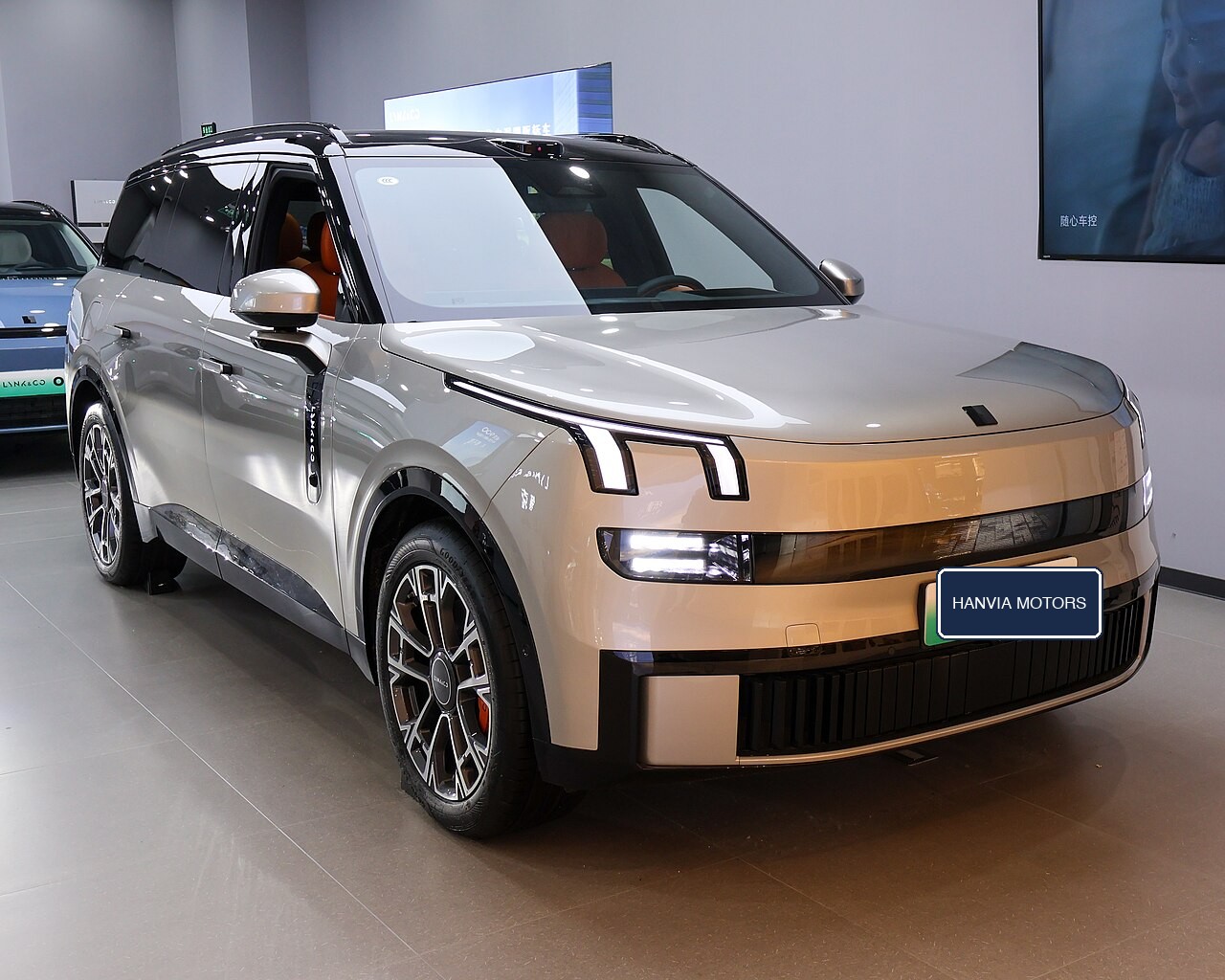
If a supplier offers you a “2026 Lynk & Co 900” and a “2025 Lynk & Co 900”, you are not being offered an old car and a facelift. You are being offered two different bodies. The 2026 model year is the 5-seat car, launched April 2026. The 2025 model year is the 6-seat car, launched April 2025. Both are current, both are still built, and Lynk & Co sells them as two parallel lines rather than one replacing the other. Get this wrong on a purchase order and your customer receives a car with one row fewer than they paid for.
This matters most on the trim buyers ask for by name: the 1.5T Ultra. Compare the 2026 5-seat 1.5T Ultra against the 2025 6-seat 1.5T Ultra across the manufacturer’s full specification sheet and 77 of the 89 published parameters are identical. Same engine, same battery, same electric range, same suspension, same sensor hardware, same warranty. Five things differ — and one of them is worth more than the rest combined.
👉 Need to know which model year suits your buyers? Ask us on WhatsApp · Lynk & Co 900 overview & export quote →
Why “2026” and “2025” do not mean what you think
Chinese manufacturers use a model-year label the way European brands use a body-code, and Lynk & Co has used it here to separate two products, not two generations. The factory markets them under separate names — the 6-seat as the flagship six-seater and the 5-seat as the flagship five-seater — and both sit on the same SPA Evo platform, the same 5,240 mm body and the same 3,160 mm wheelbase.
So the practical translation for an importer is short:
- 2026 model year = 5-seat (2+3). Three trims: 1.5T Halo, 1.5T Ultra, 2.0T Ultra.
- 2025 model year = 6-seat (2+2+2). Four trims: 1.5T Halo, 1.5T Ultra, 2.0T Ultra, 2.0T Explorer.
Neither is discontinued. A 2025-build car in this range is not old stock and should not be discounted as such, and a 2026 car is not a newer version of the same thing. If you have been quoted “the newer one” without a seat count attached, that quotation is incomplete — ask for it in writing before you pay a deposit. The same confusion trips up buyers across the Chinese market generally, which is why we keep a separate guide to Chinese model names versus export names.
1.5T Ultra: 2026 5-seat vs 2025 6-seat, side by side
This is the comparison most enquiries actually need. Manufacturer figures, published specification sheet.
| Spec | 2026 · 5-Seat 1.5T Ultra | 2025 · 6-Seat 1.5T Ultra |
|---|---|---|
| Launch | April 2026 | April 2025 |
| Seating | 5 (2+3) | 6 (2+2+2) |
| Boot volume | 1,215–2,568 L | 300–1,070 L |
| Kerb weight | 2,680 kg | 2,760 kg |
| Driving-assist chip | NVIDIA DRIVE AGX Thor · 700 TOPS | NVIDIA Orin-X · 254 TOPS |
| Assistance platform | H7 | H5 |
| Satellite communication | Not listed | Listed |
| Identical on both | ||
| Engine | JLM-4G15TD · 1.5T turbo · 190 PS / 140 kW · 300 N·m · 95 RON | |
| Drivetrain | PHEV · front + rear motor · 3-speed DHT · electric AWD | |
| System output | ≈ 530 kW · ≈ 1,000 N·m | |
| 0–100 km/h | ≈ 4.8 s | |
| Top speed | ≈ 210 km/h | |
| Battery | 44.85 kWh NMC (CALB cells) | |
| EV range (CLTC) | ≈ 220 km | |
| DC charging | 20–80% in ≈ 26 min | |
| Fuel tank | 60 L | |
| Dimensions | 5,240 / 1,999 / 1,810 mm · wheelbase 3,160 mm · ground clearance 194 mm | |
| Suspension | Double-wishbone front, five-link rear · dual-chamber air suspension | |
| Tyres | 275/45 R21 front and rear | |
| Sensors | 1 LiDAR · 5 mm-wave radar · 12 ultrasonic · 11 cameras | |
| Cockpit | 2 × Snapdragon 8295 · LYNK Flyme Auto · 30-inch display · 5G | |
| Warranty | Vehicle 5 years / 100,000 km · battery unlimited years / unlimited km | |
| Steering | Left-hand drive from the factory | |
The one difference that actually changes the car
Both cars carry the same sensor set — one LiDAR, five millimetre-wave radars, twelve ultrasonic sensors, eleven cameras. What differs is the processor reading them. The 2026 5-seat Ultra runs NVIDIA’s DRIVE AGX Thor at 700 TOPS on the H7 platform. The 2025 6-seat Ultra runs Orin-X at 254 TOPS on H5.
That is roughly 2.75× the compute on identical hardware inputs, and on this model it is the line between the two assistance tiers: H7 is the platform the manufacturer pairs with its higher-level functions, including door-to-parking-space navigation assistance and continuous automatic evasive steering. H5 handles the standard highway and parking assistance set.
Whether that is worth anything to you depends entirely on where the car lands. In markets with unmarked lanes, informal traffic and no mapping support, the practical daily difference between the two tiers is small and neither will behave the way a demo video suggests — a point we make in our import traps checklist and are not going to soften here. In the Gulf, in Chile and Peru, and for buyers who read spec sheets before they buy, 700 TOPS versus 254 TOPS is a number that closes deals. Sell it where it is understood; do not pay a premium for it where it is not.
Note the trade in the other direction: the manufacturer lists satellite communication on the 2025 6-seat Ultra and does not list it on the 2026 5-seat Ultra. For buyers operating outside network coverage — mining, agriculture, long inland routes — that is a real feature and it sits on the older model year, not the newer one. We confirm it per allocated unit before you pay any balance.
Space: this is where the two genuinely part company
The 5-seat gives up the third row and gains a boot of 1,215 L, expanding to 2,568 L with the rear seats folded. The 6-seat carries six people and leaves 300 L behind the third row, 1,070 L with it folded. On a car of the same external length, that is the whole decision.
The 5-seat also runs 80 kg lighter — 2,680 kg against 2,760 kg — which is what removing a row of seats and its structure costs. It does not show up in the performance figures, which are identical.
The 6-seat’s second row is two individual captain’s seats with a long slide range, which is what makes it read as an executive car rather than a family car. The 5-seat’s second row is a wide bench designed to seat three adults properly rather than as an afterthought.
Who should order which
Order the 2026 5-seat for markets where the car is bought by its owner and carries luggage, tools or stock as often as passengers — most of West Africa’s private-buyer segment, and family buyers generally. It is also the one to quote when a buyer specifically asks about driver assistance, because of the Thor/H7 platform.
Order the 2025 6-seat for chauffeur and executive use, for hotel and corporate fleets, for large families, and for the Gulf, where a third row and captain’s seats sell better than boot space. It is also the only body that offers the 2.0T Explorer if a buyer wants the flagship.
Where a customer is undecided, the deciding question is not model year — it is whether they will more often carry a sixth person or a full boot. Ask that one first. Our model comparison hub and the 900 overview page cover the rest of the range.
Above the 1.5T: what the 2.0T adds
Both bodies offer a 2.0T Ultra. On the 6-seat, where the full published data set is available, it changes more than the badge: a JLH-4G20TDC 2.0T engine (254 PS / 187 kW / 350 N·m), 52.38 kWh of CATL-supplied battery for ≈280 km CLTC, ≈540 kW and ≈1,038 N·m system output, 0–100 km/h in ≈4.6 s, a 240 km/h top speed, and DC charging cut to about 17 minutes. It also runs Thor/H7 as standard.
The 2.0T Explorer is 6-seat only. Three motors instead of two, ≈650 kW and ≈1,248 N·m, 0–100 km/h in ≈4.3 s, rear-wheel steering, a 65 L tank and 268 km CLTC range. It is the flagship and it is priced as one.
For most B2B orders the 2.0T Ultra remains the sweet spot in either body — the bigger battery and the longer electric range are what buyers notice after delivery, and the extra 60 km of CLTC range is a more useful upgrade than the Explorer’s third motor in nearly every market we ship to.
One honest limitation: our line-by-line parameter set covers the two 1.5T trims on the 2026 5-seat, and all four trims on the 2025 6-seat. The 2026 5-seat 2.0T Ultra is offered by the factory, but we quote its exact specification per allocated unit rather than reproducing figures we have not verified against the manufacturer’s own sheet.
Export notes
- New, unregistered, zero mileage. Both model years are supplied new to order, which clears the used-vehicle age limits enforced in Côte d’Ivoire, Senegal and elsewhere. Confirm new-import duty and homologation with your clearing agent before ordering.
- Model year on documents. Because the two model years are different bodies, the year on the invoice, the VIN and the bill of lading must match the seat count your customer ordered. We advise VIN and production date in writing before any balance falls due — the same sequence set out in our inspection and condition report process.
- PHEV charging. Cars ship with the GB/T connector fitted at the factory and the OEM portable AC cable. Mains voltage across our markets charges the car normally; the connector is Chinese standard. Type 2 adapter sets are quoted as a separate line.
- Left-hand drive across every trim and both model years.
- Container loading. A 900 is a large SUV — see how many cars fit in a container before planning a mixed load, and shipping routes and ports for transit times.
- Figures above are manufacturer reference data. Exact trim, colour, options and build date are confirmed on quotation for your market.
Get a Lynk & Co 900 export quote — tell us seat count and trim →
FAQ
Is the 2026 Lynk & Co 900 a facelift of the 2025?
No. The 2026 model year is the 5-seat body and the 2025 model year is the 6-seat body. Both are in current production and sold in parallel. A 2025-build 900 is not superseded stock.
What is the real difference between the 2026 and 2025 1.5T Ultra?
Across the manufacturer’s 89 published parameters, 77 are identical. The five differences are seating (5 vs 6), boot volume (1,215–2,568 L vs 300–1,070 L), kerb weight (2,680 vs 2,760 kg), the driving-assist chip (Thor 700 TOPS on H7 vs Orin-X 254 TOPS on H5), and satellite communication, which is listed on the 2025 6-seat only.
Do the two model years differ in power or electric range?
No. Both 1.5T Ultra versions produce ≈530 kW and ≈1,000 N·m, reach 100 km/h in ≈4.8 s, carry the same 44.85 kWh battery and are rated at ≈220 km CLTC. Do not pay a premium on either for performance.
Which one has better driver assistance?
The 2026 5-seat, by a wide margin on paper: NVIDIA Thor at 700 TOPS on the H7 platform against Orin-X at 254 TOPS on H5, reading an identical sensor set. Whether that translates into a usable difference depends on road marking and mapping quality in your market.
Can I get a 6-seat 2026 or a 5-seat 2025?
No. Seat layout and model year are tied together on this model. If you need six seats, you are ordering the 2025 body; if you need the Thor platform, you are ordering the 2026 body.
Which version has the longest electric range?
The 2.0T Ultra, at ≈280 km CLTC from a 52.38 kWh battery, in either body. Both 1.5T Ultra versions offer ≈220 km.
Are all versions left-hand drive?
Yes — every trim in both model years is LHD from the factory, correct for the Gulf, North Africa, West Africa and Latin America.
Related
- Lynk & Co 900 — overview & export quote
- Lynk & Co 900 — export via Dubai
- Lynk & Co 06 — compact PHEV SUV
- Zeekr 9X — 5-seat vs 6-seat
- Zeekr 8X vs 9X for export
- Jetour T2 — 1.5T vs 2.0T
- Top Chinese SUVs and EVs for export in 2026
- All new cars for export
- How to import cars from China — 2026 dealer guide
- About Hanvia Motors
- Contact Hanvia Motors