
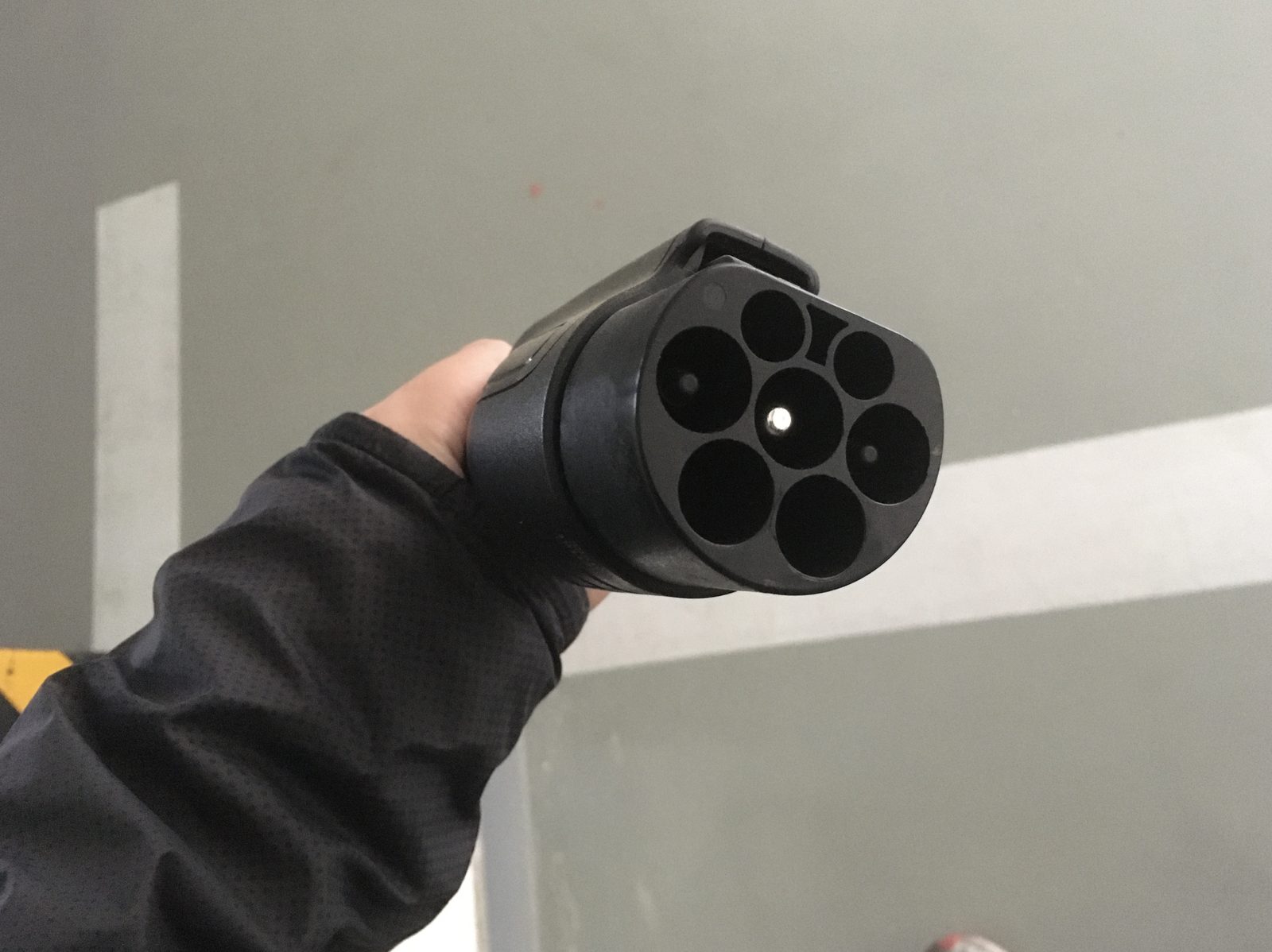
Ethiopia uses a 220 V, 50 Hz supply, the same voltage and frequency as China, so a Chinese electric car does not need a voltage converter. The difference is the socket: Ethiopian buildings use Type C, F and L outlets, while a China-market portable charger ends in the Chinese Type I plug. Home charging in Ethiopia depends on the right adapter, a circuit that can carry the current, and a charger rated for continuous use. The voltage already matches.
👉 Tell us the model and the destination city and we will confirm the charging inlet, the portable charger in the box and the cable rating before you pay. Ask us on WhatsApp · Browse current EV stock →
What voltage and socket types does Ethiopia use?
Ethiopia supplies 220 V single-phase and 380 V three-phase at 50 Hz. The socket types recorded for the country are Type C (the two-round-pin Europlug), Type E, Type F (Schuko) and Type L (the Italian three-pin). Type C and Type F are common; Type L also appears in some buildings. The voltage and frequency match China exactly, which is why a car built for the Chinese market can be charged here without a transformer.
The plug shape does not match. China uses Type A and Type I outlets at 220 V, and a portable charging gun sold with a China-market car normally ends in a Chinese 10 A or 16 A plug. That plug will not enter a Type C, F or L socket. A plug adapter solves the shape; it does not change the voltage, and it does not increase the current the socket can safely carry.
This distinction matters for importers because a customer who plugs a car into the wrong adapter may report a charging fault that is really an installation fault. Our guide to importing electric cars into Ethiopia covers the wider paperwork and route.
Can a Chinese EV charge from an ordinary Ethiopian wall socket?
Yes, through the portable charging gun that comes with many Chinese EVs, but the charge rate is limited by the socket and the gun, not by the car. A portable charger running at 10 A on a 220 V supply delivers about 2.2 kW; at 16 A it delivers about 3.5 kW. Those figures are arithmetic: 220 V multiplied by 10 A is 2,200 W, and 220 V multiplied by 16 A is 3,520 W. The charger’s own label may set a lower limit.
The practical limits are:
- The gun’s rating. The current is printed on the charger body or its label. Some units are fixed at 8 A, some switch between 8 A, 10 A and 16 A, and some are limited by the plug fitted to the cable.
- The socket and circuit. A domestic socket on a lighting circuit is not the same as a dedicated 16 A circuit. The breaker, cable size and earthing decide what can be drawn continuously for several hours.
- The adapter. A travel adapter rated for a kettle is not a permanent solution for a load that runs for ten hours. Use an adapter rated for the full continuous current, or have an electrician fit a socket that matches the charger plug.
- Earthing. Electric vehicle chargers check the earth connection before they start. If the building has no reliable earth, the charger may refuse to charge or may trip.
A China-market car’s portable gun is designed for a Chinese 220 V supply. The voltage is right in Ethiopia, so the charger itself works; the installation around it is what needs checking. A qualified electrician should confirm the circuit before the first long charge.
Which Chinese EVs include a portable charging gun?
BYD’s China configuration sheets list a portable charging gun for the Yuan UP and the Dolphin, but not for the Seagull. The Seagull sheet lists the charging ports and the AC and DC power ratings, and leaves the portable-gun row blank. A Seagull can still use a portable gun; the box contents have to be confirmed with the seller.
| Model (China-market sheet) | Portable charging gun listed | AC charging power listed | DC peak |
|---|---|---|---|
| BYD Seagull, 2025 versions | No | 7 kW | 40 kW (405 km) / 30 kW (305 km) |
| BYD Seagull, 2024 versions | No | 6.6 kW | 40 kW / 30 kW |
| BYD Yuan UP | Yes | Not listed on the sheet | 65 kW (401 km) / 45 kW (301 km) |
| BYD Dolphin | Yes | 7 kW | 80 kW / 60 kW / 40 kW by version |
Export versions can differ. A car ordered for an export market may be supplied with a different cable set, a Type 2 inlet or a CCS2 inlet. The configuration sheet describes the Chinese domestic car; the invoice and the inlet on the actual vehicle decide what the buyer receives. Our Yuan UP import guide shows how the Chinese sheet and the export build diverge on the same model, the Atto 2 versions guide compares the powertrains under the export name, and the guide to Chinese and export model names explains why the badge is not enough to identify the build.
How long does home charging take for a Seagull, Yuan UP or Dolphin?
From empty, a Seagull needs about 14 to 18 hours on a 10 A socket and 9 to 11 hours on a 16 A socket; a Yuan UP needs about 15 to 21 hours and 9 to 13 hours; a Dolphin needs about 20 to 28 hours and 13 to 17 hours. The range depends on battery size. The table uses the China configuration sheet battery capacities and assumes a constant charge rate, which is an approximation: the last part of a charge is slower, and the car may taper before 100%.
| Model | Battery (kWh) | Hours at 2.2 kW (10 A) | Hours at 3.5 kW (16 A) |
|---|---|---|---|
| Seagull 305 km | 30.08 | 13.7 | 8.6 |
| Seagull 405 km | 38.88 | 17.7 | 11.1 |
| Yuan UP 301 km | 32.00 | 14.5 | 9.1 |
| Yuan UP 401 km | 45.12 | 20.5 | 12.9 |
| Dolphin 420 km | 44.93 | 20.4 | 12.8 |
| Dolphin 520 km | 60.48 | 27.5 | 17.3 |
These times assume the car is charged from near empty. Most owners charge overnight and top up daily, so the hours needed to replace a day’s driving matter more than a full-charge time. A car used for 40 km a day replaces a small share of a full charge, so an overnight top-up takes a few hours rather than a full night.
A 7 kW wallbox shortens the 16 A times by about half, but it needs a dedicated circuit of roughly 32 A at 220 V. A domestic supply may not have 32 A to spare, and the installation has to be sized for the building. The wallbox is worth considering for a fleet or a high-mileage taxi; for a private car that charges overnight, a 16 A circuit is often enough.
The Seagull and Dolphin sheets list 7 kW AC charging, so both can use a 7 kW wallbox where the supply supports it. The Yuan UP sheet does not list an AC power figure, so the wallbox rate for that model must be confirmed against the build. The Dolphin export guide covers the version and range differences, the Seagull generation comparison explains the change from 6.6 kW to 7 kW AC charging, and Dolphin versus Seagull compares the two cars for city use.
What public charging does Ethiopia have in 2026?
The public network has moved from a handful of pilot sites to a small but growing national system, and it is still concentrated in Addis Ababa. The Ethiopian Electric Utility (EEU) opened 11 fast-charging stations on 31 October 2026 in six cities: five in Addis Ababa and one each in Bishoftu, Mojo, Adama, Batu and Hawassa. The 11 stations can charge 96 vehicles at the same time, and the utility said its total capacity had reached about 150 vehicles at once, with a plan to increase the number of stations fivefold over the following year.
That followed the first phase announced in April 2026: 40 charging stations, of which 32 in Addis Ababa and eight in nearby cities, at an estimated cost of USD 10 million. In June 2026 the EEU commissioned a 24-vehicle hub at Kilinto Industrial Park. The utility plans to extend the network along the Ethiopia-Djibouti trade corridor in its second phase, and to regional cities including Dire Dawa, Mekelle, Bahir Dar, Gondar, Jijiga, Jimma and Arba Minch.
Ethio Telecom runs a separate network. Its four Super-Fast Smart stations, the fourth opened in Adama in April 2026, can serve 60 vehicles at once across the network; the Adama site uses 180 kW chargers. Payment and location are handled through the telebirr SuperApp, and the Adama station was configured to serve European-specification cars that had previously faced compatibility problems.
The scale is still small against the fleet. The Ministry of Transport and Logistics put the number of EVs in Addis Ababa at more than 140,000 in April 2026 and estimated that about 1,176 charging stations would be needed to meet demand. The National E-Mobility Strategy targets more than 2,200 charging centres by 2030, and the government aims for more than 500,000 EVs by 2032. Fuel-car imports for private use have been banned since 2024.
How much does public charging cost in Ethiopia?
The EEU’s public charging service was priced at 14 to 18 Ethiopian birr per kWh in April 2026, about USD 0.09 to USD 0.12 at the exchange rate then quoted. At that rate, a full charge from near empty costs roughly:
| Car | Battery (kWh) | Cost per full charge (ETB) |
|---|---|---|
| Seagull 305 km | 30.08 | 421-541 |
| Yuan UP 401 km | 45.12 | 632-812 |
| Dolphin 520 km | 60.48 | 847-1,089 |
Those are public fast-charging prices, not the household tariff. Electricity taken from a home meter is billed separately on the residential tariff and appears on the monthly bill; the 14-18 birr figure applies to the EEU’s charging service. Prices can change, so treat these as an October 2026 reference. The comparison of EVs for Addis Ababa ride-hailing puts running costs in the context of daily use.
Will a China-market car’s GB/T plug fit Ethiopian public chargers?
Not automatically. A China-market car carries a GB/T inlet, while an export-specification car may carry Type 2 for AC and CCS2 for DC, and a public station may support one, the other or both. The physical shape is only part of the question. GB/T and CCS2 use different communication protocols for DC charging, so a passive plug adapter does not make a GB/T car fast-charge on a CCS2 station. Active adapters exist, but they are expensive and must be matched to both the car and the charger.
A GB/T car can use only a station with a GB/T connector. Whether a given station has one depends on when it was built and which fleet it was designed for. The newer Ethio Telecom hub in Adama added compatibility for European-specification cars, so the mix is changing; the connector on the station still has to be checked.
Before promising a route, check the station, not just the map pin: the connector type, the output, the opening hours and the payment method. A driver who reaches a station with the wrong connector cannot charge there. Our Yuan UP guide explains how to identify a GB/T inlet from a CCS2 inlet on the car, and the guide to shipping EVs with lithium batteries covers the transport rules that apply before the car reaches Ethiopia.
What should an importer confirm before selling a Chinese EV into Ethiopia?
Confirm four things before the car leaves China: the inlet on the actual build, the charging accessories in the box, the customer’s home supply, and the public stations on the customer’s regular routes. A quotation that lists only the model name and battery size leaves all four open.
- The inlet. China-market build means GB/T; export build may mean Type 2 and CCS2. Ask for a close-up photograph of the charging port, not just the specification sheet.
- The accessories. Check whether a portable charging gun is included and what plug it carries. If the car is a Seagull, the Chinese sheet does not list one, so the answer has to come from the seller.
- The customer’s supply. Ask for the main breaker rating and a photograph of the socket where the car will charge. A customer with a 10 A supply should plan around 2.2 kW, not a 7 kW wallbox.
- The route. Identify the public stations the customer will use and confirm their connectors. A car charged only at home is fine for Addis; a car used between cities needs a charging plan.
For the vehicle itself, a pre-shipment inspection is the cheapest way to catch a build that does not match the invoice. Remote inspection before paying explains what to film, and the guide to shipping a single car from China covers the transport choices for a first order. The CIF Djibouti cost breakdown shows where the landed cost stops and the inland leg begins, FOB, CFR and CIF explains which party books the ship and the insurance, and RoRo versus container shipping covers the two main sea options.
FAQ
Can I plug a Chinese EV charger into an Ethiopian socket?
Not directly. A China-market portable charger ends in a Chinese Type I plug, while Ethiopian sockets are Type C, F or L. A plug adapter rated for the charger’s full current will bridge the shape, and the voltage matches at 220 V. For a load that runs for hours, a fixed socket fitted by an electrician is safer than a travel adapter.
Is Ethiopia 220 V or 230 V?
Ethiopia is listed at 220 V, 50 Hz, with a 380 V three-phase supply. The 230 V figure used in some European standards is within the normal tolerance of the same distribution system, and a charger rated for 220-240 V will operate. The frequency is 50 Hz, the same as China.
How long does it take to charge a BYD Seagull at home in Ethiopia?
A Seagull with the 30.08 kWh battery takes about 13.7 hours at 2.2 kW and 8.6 hours at 3.5 kW from empty. The 38.88 kWh version takes about 17.7 hours and 11.1 hours. Daily top-ups take proportionally less time.
Do BYD cars sold in China come with a portable charger?
The China configuration sheet lists a portable charging gun for the Yuan UP and the Dolphin, but not for the Seagull. Accessories can change by model year and by order, so the box contents should be confirmed with the seller before shipment.
Are there enough public charging stations in Ethiopia?
Not yet. The EEU and Ethio Telecom operate a combined network that is growing but still concentrated in Addis Ababa, and the Ministry of Transport estimated in April 2026 that about 1,176 stations would be needed for the capital’s fleet. Outside the capital, plan charging stops in advance.
Will a GB/T car charge at an EEU station?
Only if that station has a GB/T connector. The connector should be checked station by station; newer sites are adding CCS2 compatibility for European-specification cars. A passive adapter does not solve the DC protocol difference.
How much does a full charge cost in Addis Ababa?
At the EEU public charging rate of 14-18 birr per kWh quoted in April 2026, a 30 kWh Seagull costs about 420-540 birr for a full charge, a 45 kWh Yuan UP about 630-810 birr, and a 60 kWh Dolphin about 850-1,090 birr. Home charging is billed separately on the residential tariff.
Sources: Ethiopia mains electricity, Wikipedia “Mains electricity by country” (Ethiopia: types C, E, F, L; 220/380 V; 50 Hz; China: types A, I; 220/380 V), checked November 2026; US Army ATP 3-34.45 Appendix H (Ethiopia: C, E, F, L; 220/380 V; 50 Hz); Electrical Safety First country page for Ethiopia (220 V, 50 Hz; types C and F), checked November 2026. The three sources agree on 220 V/50 Hz and on types C and F; Electrical Safety First lists G instead of L, so this article names C and F as the common types and mentions L as also recorded. Vehicle charging data, BYD China configuration tables for the Seagull, Yuan UP and Dolphin (evlook.com), checked September 2026: battery 30.08/38.88 kWh, 32/45.12 kWh and 32.26/44.93/60.48 kWh; AC 7 kW (Seagull 2025), 6.6 kW (Seagull 2024), 7 kW (Dolphin); DC 40/30 kW, 65/45 kW and 80/60/40 kW; portable charging gun listed for Yuan UP and Dolphin, not for Seagull. Public network, Xinhua interview with EEU chief communications officer Anwar Abrar, 8 April 2026: phase one 40 stations (32 Addis Ababa, 8 nearby cities), about USD 10 million, 24 vehicles per station, tariff 14-18 birr/kWh (USD 0.09-0.12), more than 140,000 EVs in Addis Ababa and about 1,176 stations needed according to the Ministry of Transport and Logistics. Ethiopian News Agency, 31 October 2026: 11 stations in six cities (five in Addis Ababa), 96 vehicles at once, total capacity about 150, fivefold expansion planned within a year, more than 2,200 charging centres by 2030 under the National E-Mobility Strategy. Xinhua, 17 June 2026: Kilinto Industrial Park hub for 24 vehicles, second phase along the Ethiopia-Djibouti corridor, more than 500,000 EVs targeted by 2032. Addis Fortune, 20 April 2026: Ethio Telecom four Super-Fast Smart stations, 180 kW chargers, 60 vehicles at once, 284,000 sessions and 7.1 million kWh delivered, telebirr integration, Adama station configured for European-specification cars. The 2024 ban on fuel-car imports is from Xinhua and ENA. Single-source items: the exact split of the 11 October stations by city and the fivefold target are from ENA only; the Ethio Telecom session and energy totals are from Addis Fortune only. Charging times are arithmetic from the stated battery capacity and charge power, not manufacturer claims, and assume a constant rate. Home electricity tariff is not stated because the EEU tariff page could not be read; the 14-18 birr figure is the public charging tariff, not the household rate. Photo: \u4e4b\u4e4e / Wikimedia Commons, CC BY-SA 4.0.