
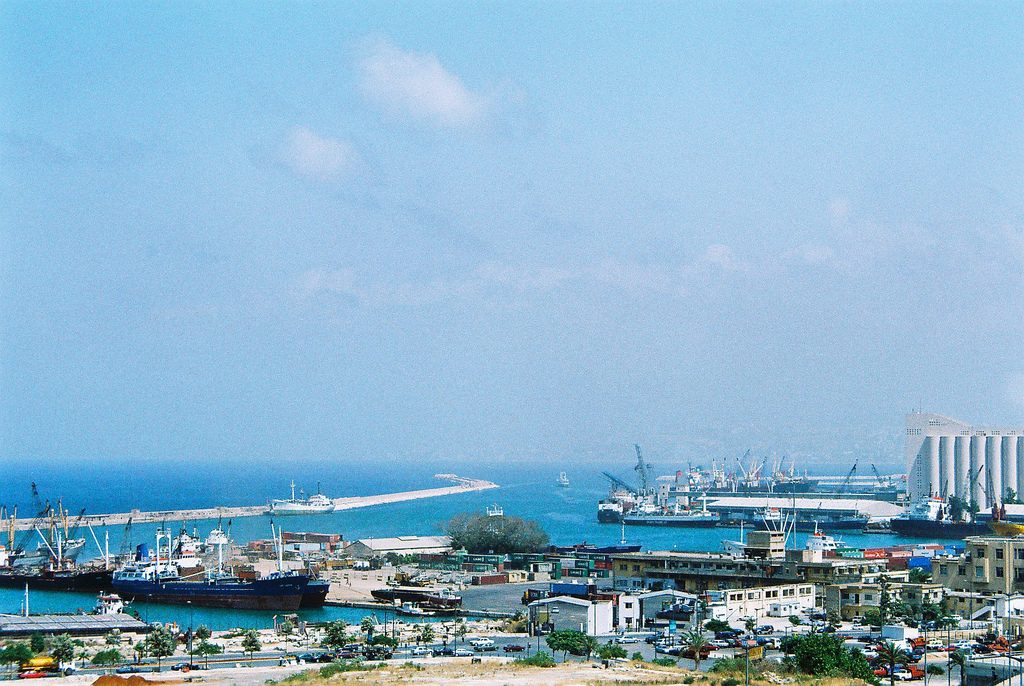
Lebanon accepts left-hand-drive SUVs from China, but it screens condition and paperwork harder than most buyers expect: the traffic law bans crash-damaged, welded, flooded and half-cut imports, and used cars need a roadworthiness certificate issued within two months of shipment. For a 10–15 unit batch through Beirut, the safe order is: fix the exact model and powertrain, clear the model-year and diesel rules with a licensed broker, build the origin and inspection file, inspect the units before payment, and only then book the sailing.
👉 Tell us the model, trim and quantity — we will confirm what is available in China and how it can ship to Beirut. Ask on WhatsApp
What does Lebanon check on an imported SUV?
The checks are legal, documentary and physical, and they sit in three places: the traffic law, the customs law and the inspection at the port or at first registration.
| Check | What Lebanese rules require | Legal basis |
|---|---|---|
| Steering | Left-hand drive; steering wheel fixed on the left | Traffic Law 243/2012, Art. 93 |
| Condition | No import of vehicles unfit to drive, crash-damaged on the main chassis, welded, joined, burnt, flooded, corroded or cut in half | Traffic Law 243/2012, Art. 348 |
| Used vehicles | Registration document plus a mechanical inspection certificate from the exporting country, dated no more than two months before actual shipment | Traffic Law 243/2012, Art. 348 |
| Used-car age | Statutory model-year cap, set by Law 150/1992 and amended since | Law 150/1992 |
| Origin | Origin on the original commercial invoice, or a separate certificate of origin | Customs Law, Art. 28 |
| Fuel | 95-octane unleaded capped at 10 ppm sulphur since December 2024 | Libnor NL-254:2016 |
A clean new petrol SUV is the simplest import. A used unit is still possible, but condition and model year become the two things most likely to stop it.
Does Lebanon require left-hand drive for imported SUVs?
Yes. Article 93 of the 2012 traffic law puts the steering wheel on the left and prohibits importing vehicles that do not comply. China’s domestic market is left-hand drive, so a China-sourced SUV normally satisfies the rule without conversion.
Two details matter. A right-hand-drive bargain from Japan, Thailand or the UK cannot be registered. And conversion from right to left is not automatically forbidden: Article 93-3 allows it with prior approval from the competent service and a mechanical inspection. That is a bureaucratic route, not a sourcing strategy, and it leaves a converted car with a resale discount.
Which SUVs can Lebanon refuse at the port?
Lebanon can refuse any vehicle that is unfit to drive, crash-damaged on its main chassis, welded or joined from sections, burnt, flooded, corroded in a way that affects strength, or imported as a half-cut. Article 348 lists those categories explicitly, including front and rear clips.
For used cars, the same article requires the exporting country’s registration permit and a mechanical inspection certificate dated no more than two months before actual shipment. Cars from the United States need a title showing whether they are recorded as Salvage or Reconstructed. If arrival inspection finds the car does not match the manufacturer’s specification, or customs finds the declared data false, the importer must re-export it at their own cost.
That last point turns a cheap used SUV into an expensive mistake: a re-export from Beirut is a second shipment and a second set of port charges. Before paying for a used unit, check the inspection certificate’s date against the planned sailing. Our guide to remote inspection before paying sets out what a usable report should contain, and inspecting cars in Guangzhou explains what a yard visit adds.
Is there an age limit on used SUVs imported into Lebanon?
Yes. Lebanon has a statutory model-year cap on used cars, created by Law 150/1992 and amended more than once since. The original law barred used cars manufactured more than eight years earlier; later amendments changed both the limit and the exemptions.
The figure that matters is the one in force on your shipment date, counted from the model year rather than first registration. Do not infer it from a listing: a car advertised as 2019 may be a 2018 model year, and the customs declaration uses the model year on the documents. “Zero-km used” is still used — see China’s zero-km used-car export rule. For new stock the cap does not apply; in a mixed container it applies per vehicle.
What documents does a Beirut-bound batch need?
The core file is a commercial invoice, packing list, bill of lading, proof of origin, and for used cars the export registration and inspection documents. They must agree on model, VIN, engine number, model year and quantity; a mismatch is treated as a false declaration.
Article 28 of the Customs Law accepts either an origin statement on the original commercial invoice or a separate certificate of origin; customs may demand supplementary proof, and false origin documents carry penalties. Chinese shipments normally carry a certificate of origin issued through the China Council for the Promotion of International Trade, with the exporter name matching the invoice exactly.
Also prepare an export de-registration for used units, the two-month inspection certificate, and Arabic translations of anything the clearing agent will submit. English is normally accepted for the commercial file, but the official submission is in Arabic. The full sequence is in our China car export documents checklist; the consignee and release mechanics are in telex release versus sea waybill; the risk point behind CIF and FOB is in FOB, CFR and CIF.
Does Lebanon’s fuel suit modern Chinese engines?
Yes, and the position improved at the end of 2024. A Cabinet decree dated 12 September 2024 adopted three Libnor standards: NL-254:2016 for 95-octane petrol, NL-753:2016 for 98-octane and NL-484:2016 for diesel. Maximum sulphur fell from 1,000 ppm to 10 ppm for 95-octane, from 500 ppm to 10 ppm for 98-octane, and from 350 ppm to 10 ppm for diesel, with compliance by 19 December 2024. The standards are modelled on EN 228:2012 and EN 590:2013 and incorporate most Euro 6 requirements.
That matters because Lebanon’s old petrol was far above the sulphur level Euro 6 engines are designed for, and the Association of Car Importers said manufacturers were unwilling to ship certain Euro 6-only models. The 10 ppm standard removes that objection for a modern China 6 engine with a close-coupled catalyst and gasoline particulate filter.
Two cautions remain. Specify 95-octane rather than an engine that depends on 98, because 98 is not stocked everywhere. And reports of adulterated petrol persist, so buy from stations with a paper trail and choose an engine that tolerates 95.
Diesel is separate. Lebanon now has a 10 ppm diesel standard (B7, up to 7 percent FAME), but that does not settle whether a diesel vehicle may be imported. Law 341/2001 on transport pollution, amended in September 2024, governs diesel vehicle and engine imports and is specific about categories and weights. Diesel at the pump does not mean a diesel passenger SUV will register; clear the exact model, engine code and gross vehicle weight with a broker first.
Petrol, diesel, hybrid or EV for a Lebanese batch?
Petrol is the default, a plug-in hybrid is the flexible second choice, diesel needs legal clearance, and a pure EV depends on the buyer’s charging.
Petrol is the least complicated import: low-sulphur fuel is now standard, the service network understands it, and resale is broad. Plug-in hybrids suit buyers who want electric running in the city but cannot rely on charging on longer trips — the BYD Song Plus DM-i, with 75, 112 or 160 km of CLTC electric range, is the reference case (Song Plus EV versus DM-i). Lebanon’s grid is the constraint, not the car.
Diesel carries the legal question above plus AdBlue, particulate-filter service and common-rail diagnostics. EV suits a fleet with its own charger far better than a private buyer in an apartment block, and its duty treatment is a moving policy area — price the landed cost with the broker rather than assuming a rate.
Which Chinese SUVs fit Lebanese buyers?
A dealer’s batch should cover four jobs: a value family SUV, a seven-seat family car, a boxy lifestyle SUV and a genuine off-roader.
| Buyer need | Model example | What it is |
|---|---|---|
| Value family SUV | Changan CS75 Plus / X5 Plus | Petrol compact and mid-size SUVs |
| Seven seats | Jetour X70 Plus | Petrol three-row SUV |
| Boxy lifestyle SUV | Jetour T2 | 4,785 mm five-seat unibody, 1.5T 135 kW or 2.0T 187 kW |
| Boxy lifestyle SUV | 212 T01 | Ladder-frame off-roader, 2.0T petrol rated at 185 kW |
| Serious off-roader | Tank 300 petrol | Body-on-frame 4×4, 167 kW 2.0T in Gulf specification |
| Plug-in hybrid | BYD Song Plus DM-i | 1.5-litre petrol plus electric motor, 2,765 mm wheelbase |
| Premium petrol | Hongqi HS5 | 2.0T petrol rated at 165 kW, 64-litre tank |
For the value end, compare the Changan CS75 Plus and X5 Plus. The Jetour X70 Plus is the three-row option. The Jetour T2, T1 and Traveller guide explains why the same SUV carries different names, and the 212 T01 export trims and 212 T01 versus Jetour T2 cover the boxy pair. For a heavier off-road mix, see Tank 300 petrol, diesel and Hi4-T; for plug-in hybrids, Sealion 06 DM-i versus Song Plus DM-i; and for premium petrol, the Hongqi HS5 export guide.
A Beirut showroom selling to private families will do more with the CS75 Plus, X70 Plus and Song Plus DM-i. A dealer supplying the mountains, the Bekaa or construction fleets will find more takers for the 212 T01, Tank 300 and a pickup. Ordering ten identical units because the price list is simple is the mistake to avoid.
What should a dealer check on parts and service before choosing a model?
Check consumables and diagnostics before the badge. Confirm that oil filters, brake pads and cabin filters cross-reference to models already in Lebanon; ask which scan tool and software subscription the car needs; confirm the A/C condenser, cooling fan and dust filtration suit Lebanese summers; and check how quickly bumpers, lights and mirrors can be supplied. A model that cannot be serviced locally becomes a resale discount, whatever its specification. The GCC-spec versus China-spec comparison shows which specification items are regional and worth confirming on the exact VIN.
How long does shipping from China to Beirut take?
Allow 25–35 days port to port from the main Chinese export ports to Beirut, depending on origin and whether the sailing is direct or tranships. Forwarder schedules checked in November 2026 put the range at roughly 25–35 days. Beirut is the main gateway; Tripoli handles a smaller share of cargo and can be an alternative on some schedules.
RoRo is usually cheaper per unit and drives the car on and off, but offers less weather protection and nothing may be left inside — see RoRo versus container shipping. A container costs more but seals the car; a 40ft high-cube normally takes two to three mid-size SUVs. Budget for demurrage if documents are late (demurrage and storage charges) and for cargo insurance that covers the sea leg and port handling (marine cargo insurance claims). The Nansha car terminal is one southern departure point worth comparing.
How should a batch buyer pay and inspect?
Inspect before paying the balance, and match the payment method to the order size. Ask for a VIN-level list, photographs of each unit and a walkaround video; for a high-value batch, a third-party inspection of a sample or of every unit is cheaper than a rejection at Beirut. A letter of credit protects both sides but adds cost; a telegraphic transfer is faster but depends on the supplier’s record — the trade-offs are in letter of credit versus T/T. Do not release the bill of lading or pay the balance until invoice, packing list, origin document and inspection certificate agree on VIN and model year. Give one Lebanese clearing agent the file early; a broker who sees it two days before arrival cannot fix a missing Arabic translation.
FAQ
Can I import a left-hand-drive SUV from China to Lebanon?
Yes. Lebanon requires left-hand drive under Article 93 of the 2012 traffic law, and China’s domestic and export SUVs are left-hand drive, so the requirement is normally satisfied without conversion.
Are Chinese SUVs allowed in Lebanon?
There is no blanket ban on Chinese brands. The car must meet the left-hand-drive rule, the condition rules in Article 348, and the documentary requirements for origin and, if used, inspection.
What is the age limit for used cars imported into Lebanon?
Lebanon has a statutory model-year cap under Law 150/1992, amended since. The original limit was eight years, but the operative figure has changed; confirm it with customs or a licensed broker for your shipment date.
Can I import a diesel SUV into Lebanon?
Diesel vehicle and engine imports are regulated under Law 341/2001, amended in September 2024. The rules are category- and weight-specific, so get the exact model and engine cleared before committing.
How long does shipping from China to Beirut take?
Typically 25–35 days port to port, depending on the Chinese origin port and whether the service is direct or tranships. Add clearing time at Beirut, which depends on the document file.
Which port do cars enter Lebanon through?
Beirut is the main gateway for vehicle imports. Tripoli handles a smaller share of cargo and can be an alternative on some schedules.
Do I need a certificate of origin for a car shipment to Lebanon?
Not always as a separate document. Article 28 of the Customs Law accepts an origin statement on the original commercial invoice or a separate certificate of origin. Most Chinese export shipments carry a certificate of origin as well.
Sources: Left-hand drive (Art. 93), condition bans, used-car registration and inspection certificate within two months of shipment, salvage/reconstructed titles and re-export at importer’s cost (Art. 348): Lebanese Traffic Law No. 243 of 2012, official PDF hosted by the Internal Security Forces (beta.isf.gov.lb), read November 2026. Origin proof (Art. 28): Lebanese Customs Law, customs.gov.lb law_en.pdf, read November 2026. Used-car age cap and original eight-year limit: Law No. 150 of 6 May 1992, Lebanese University Legal Informatics Centre (legallaw.ul.edu.lb); the current operative cut-off was not read in the official text and must be confirmed with customs. Fuel standards: Cabinet decree of 12 September 2024 adopting Libnor NL-254:2016 (95-octane), NL-753:2016 (98-octane) and NL-484:2016 (diesel B7), sulphur cut to 10 ppm, compliance by 19 December 2024, Euro 6-aligned, and the statement on Euro 6-only models — L’Orient-Le Jour, “Petrol, diesel set to upgrade next month”, 27 November 2024, read November 2026. Diesel import law (Law No. 341 of 6 August 2001, amended September 2024): Lebanese University legal database entry, read November 2026; the detailed category and weight scope was not read in the official text and is presented as a caution, not as the current rule. Shipping times 25–35 days and Beirut as main gateway: forwarder schedules and Lebanon shipping guides (Basenton, Soho Logistics, K International), read November 2026 — commercial schedules, not a customs source. Model figures: 212 T01 2.0T 185 kW, Jetour T2 4,785 mm and 1.5T 135 kW / 2.0T 187 kW, Tank 300 Gulf 2.0T 167 kW, Song Plus DM-i 75/112/160 km CLTC and 2,765 mm wheelbase, Hongqi HS5 2.0T 165 kW and 64-litre tank — from our prior articles, which used manufacturer and configuration data, read November 2026. Photo: Ismail Küpeli / Wikimedia Commons, CC BY 2.0. Photo: Ismail K\u00fcpeli / Wikimedia Commons, CC BY 2.0.