
The most expensive mistake in importing a used car from China is not buying a bad car. It is buying a good car that cannot legally enter your country. A vehicle that fails your customs age limit does not get a refund — it sits at the port accruing storage charges while you decide whether to re-export it or abandon it. And the single field that decides this is the one almost no listing shows you correctly.
This is a buyer’s checklist. Not how to vet the seller — we covered that in how to verify a Chinese car exporter — but how to check the specific car in front of you, using information you can demand before you pay anything.
Trap 1: Model year is not the manufacturing date
This is the costliest trap and the least discussed.
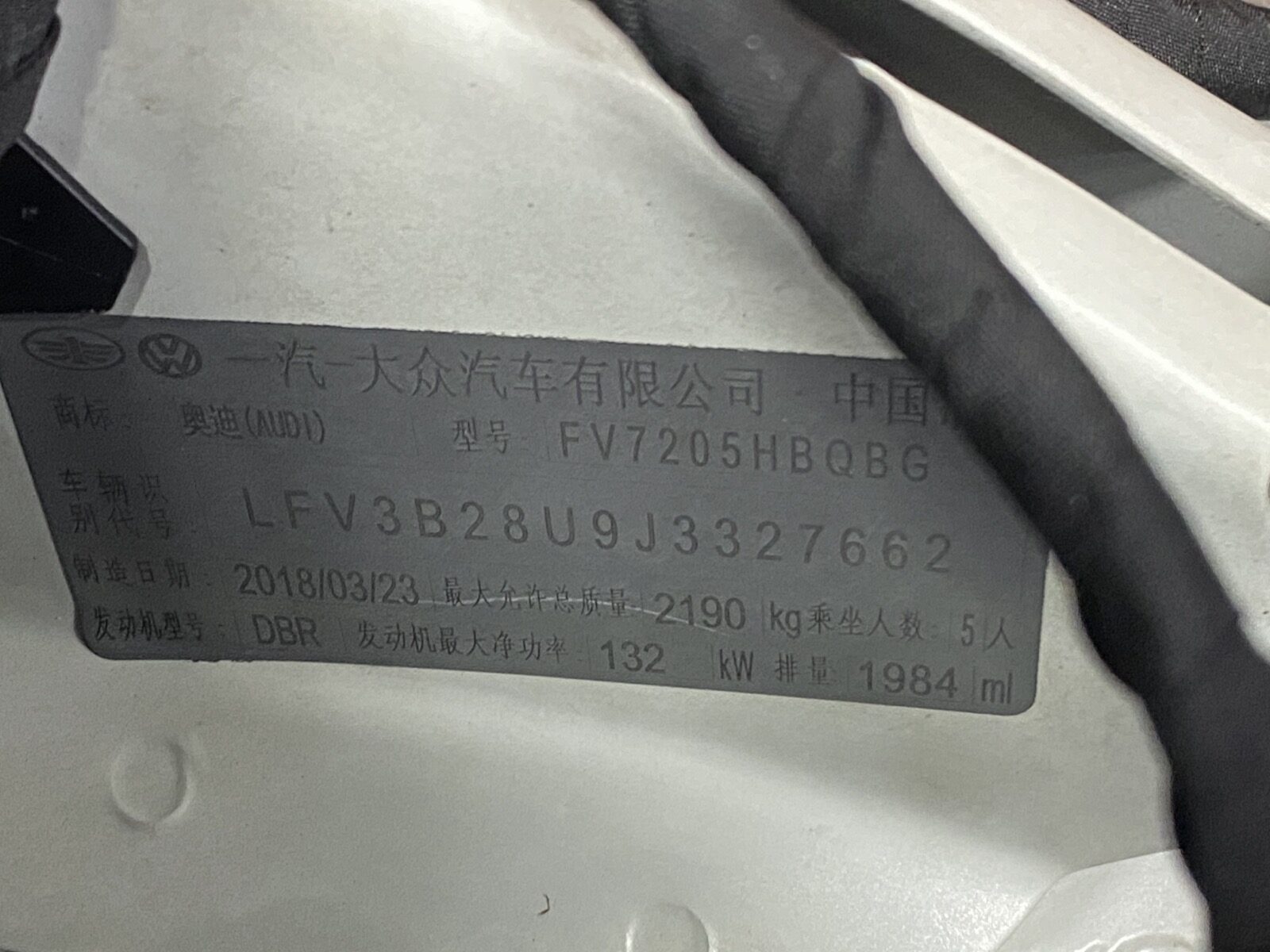
Almost every listing shows a model year: “2015 Toyota RAV4”. Almost every customs authority calculates the age limit from the manufacturing date — the month the car actually came off the line, stamped on the door jamb plate and encoded in the VIN.
These two dates routinely differ by six to eighteen months. A car sold as a 2016 model may have been built in September 2015. If your country allows vehicles up to 10 years old and customs is counting from the build date, that car is out of eligibility months before the paperwork suggests.
How to check: ask for the manufacturing date as a month and year (e.g. 2015-09), not just the model year. Then ask for a photo of the manufacturer’s plate on the driver’s door jamb, which carries the build date. Cross-check it against the VIN — position 10 encodes the model year, and if the plate and the VIN disagree, stop and ask why.
Age rules also differ by vehicle category. Senegal’s October 2025 decree, for example, sets a longer age allowance for trucks than for private cars. Check the limit for your exact category, not the headline number. Our country guides for Nigeria and Senegal go into the specifics, and the 2026 levy change affects the duty side.
Trap 2: A VIN you cannot see, or one that does not match
The VIN is the only piece of data on a listing that you can independently verify. That is exactly why some sellers withhold it until after a deposit.
A chassis number released only after payment protects the seller, not you. There is no legitimate commercial reason to hide it — the VIN does not let a competitor steal the car, it only lets a buyer check it.
How to check:
- Ask for the VIN in writing before any payment. All 78 units currently listed on our site carry a published, 17-character VIN.
- Verify it is 17 characters, with no I, O or Q — those letters are not used in VINs, and their presence means the number was typed by hand from a bad photo, or invented.
- Ask for a photo of the VIN plate, not just the number typed in a message. Then confirm the photo matches the car in the other photos — same interior, same trim.
- Decode positions 1–3 (world manufacturer identifier) and check they correspond to the brand and country the seller claims. A Chinese-built car has a VIN beginning with L.
- Give the VIN to your own agent or an inspection company for an independent history check.
Trap 3: The odometer
Odometer tampering is the oldest trick in used cars and remains common. A digital cluster is not protection — rolling back a digital odometer takes minutes with the right tool.
How to check: the mileage number itself proves nothing. What you are looking for is consistency:
- Does wear match the claim? A car showing 30,000 km should not have a shiny steering wheel, worn pedal rubbers, a sagging driver’s seat bolster or a polished gear selector.
- Ask for photos of the pedals, steering wheel and driver’s seat — not just the odometer reading.
- Ask whether the seller holds the maintenance record. Chinese dealer service systems log mileage at each visit, and a car serviced within the brand network usually has a traceable history.
- If the mileage is remarkably low for the age — a seven-year-old car with 25,000 km — treat it as a claim requiring evidence, not a selling point.
Trap 4: The photographs are not of that car
This one has become much more common, and it is easy to detect once you know what to look for.
Two versions exist. The first is studio press photography — the manufacturer’s own images, taken in a white studio, sometimes still carrying another platform’s watermark or licence plate overlay. Nobody’s used car looks like that. The second is a real car, but not this car: photos taken from another listing entirely.
How to check:
- Run a reverse image search on the main photo. If it appears on several other sites, ask the seller to explain.
- Demand at least one photo that could not exist anywhere else: the VIN plate, the odometer with today’s date written on a piece of paper next to it, or a short video walkthrough.
- Check for consistency across photos — same background, same lighting, same registration plate, same interior wear.
- Look for what is missing. Sellers photograph what looks good. A gallery with no shots of the lower body panels, wheel arches or boot floor is telling you where to look.
Note that a placeholder image is not the same problem. If a listing openly says “photographs being taken”, that is a stock status, not a misrepresentation. What matters is that nothing is presented as this car when it is not.
Trap 5: Flood, fire and structural damage
These three categories are the ones that turn a bargain into a write-off, and the ones most often left off a listing entirely — not by lying, but by simply not mentioning them.
Flood damage is the most insidious in export. Water damage to wiring looms and control modules often does not present as a fault for months, which is long enough for the car to clear customs, be sold to a retail buyer, and become your problem rather than the exporter’s.
How to check:
- Require an explicit written statement on all three: flood, fire, major structural accident. “Not mentioned” is not the same as “no”. Every unit we publish carries a stated yes/no on each.
- For flood specifically, ask for photographs of the spare wheel well and under the carpets — silt, water lines and rust in the boot floor are the first place it shows.
- Ask about the seat rails and seatbelt anchor bolts. Rust or mismatched hardware there is a strong signal.
- Smell is diagnostic and photos cannot carry it. This is one of the specific things to ask an independent inspector to check.
Trap 6: Repaint and bodywork — the honest answer that costs sellers sales
Repaint is not necessarily a problem. A resprayed panel from a parking scrape does not affect how the car drives, and on a five-year-old vehicle it is entirely normal. Repaint that is concealed is the problem, because it usually means something else is also being concealed.
This is a useful honesty test. A seller who declares repaint on a car they are trying to sell you is a seller who tells you inconvenient things. Of the 55 units on our site where cosmetic history has been recorded, 31 carry a declared repaint. We publish that number knowing it costs us sales on individual cars, because the alternative — declaring nothing and letting the buyer find out at the port — costs the relationship.
How to check: ask which panels have been repainted and why. Ask for photographs in direct sunlight at a shallow angle, where texture and colour mismatch show. An inspector with a paint thickness gauge settles it in five minutes.
Trap 7: A price that does not make sense
If one offer is far below every other offer for the same model, year and mileage, the difference is not the seller’s generosity. It is information you do not have yet.
Common explanations: the car is an accident repair; the odometer has been altered; it is a former fleet, rental or ride-hailing vehicle with hard use; the price excludes something you assumed was included; or the seller does not actually have the car and is quoting to win your deposit.
How to check: get quotes on the same specification from three sources and ask the cheapest one to explain the gap in writing. A legitimate reason exists surprisingly often — a dealer clearing stock before year end, a colour nobody local wants. A seller who cannot explain it has told you what you needed to know.
The five things to do before any money moves
- Get the VIN and the manufacturing date in writing, and check both against your country’s age limit for your vehicle category.
- Get one photograph that could only be of this car — VIN plate, odometer, or a video walkthrough.
- Get an explicit written statement on flood, fire, structural accident and repaint. Silence is not a negative answer.
- Arrange an independent inspection if this is a first order with a new supplier. The point is not the report — it is that the finding can still change the outcome. An inspection you cannot act on is theatre.
- Never pay 100% up front. A deposit with the balance against a copy of the bill of lading is the normal structure. Full prepayment removes every remaining incentive the seller has to solve your problems.
What our own numbers look like — including where they fall short
Any exporter can write a checklist. Here is how our own stock measures against this one, as of today, across 78 published used units:
| Disclosure | Coverage |
|---|---|
| Valid 17-character VIN published | 78 of 78 |
| Odometer reading published | 77 of 78 |
| Flood / fire / major accident stated | 78 of 78 |
| Repaint declared where applicable | 31 units carry a declared repaint |
| Manufacturing date published | 55 of 78 |
| Overall condition score recorded | 21 of 78 |
Two of those rows are not where we want them. 23 units — a batch that arrived this week — do not yet carry a manufacturing date, which by our own argument in Trap 1 is the most important field on the page. We are collecting it from the supplying dealer and will publish it as it comes in. Until then, those units show the model year only, and if you are buying for a market with a tight age limit you should ask us for the build date before committing.
The condition score sits at 21 of 78 for a different reason: where a score is not published it means it has not been recorded, not that it scored badly. Ask and we will tell you where a specific unit stands.
We publish the shortfall because a checklist that only measures other people is marketing. Full detail on what we document is on our vehicle inspection and condition report page.
Where to go from here
If you are at the stage of choosing a model rather than checking a specific car, our comparisons work through the trade-offs with real specification data: BYD Qin PLUS DM-i vs Seal 05 DM-i, Jetour T2 1.5T vs 2.0T, Audi A3 vs Q3, Zeekr 8X vs 9X and the Lynk & Co 900 seating layouts.
For the process end to end, start with our 2026 import guide for dealers, then shipping cars from China to Africa for ports, transit times and the RoRo-versus-container decision. Buyers considering electrified units should read hybrid cars from China to Nigeria, and top Chinese SUVs and EVs for export covers the wider model landscape.
You can browse our current stock — every unit with published VIN, mileage and damage history — under used vehicles, filtered by SUV, sedan or electric and hybrid. Order-based new units are on new cars for export. What we handle is set out on export services, who we are on about us, and you can send us a specification for a quotation.
FAQ
What is the difference between model year and manufacturing date?
The model year is a marketing designation; the manufacturing date is when the vehicle was actually built. They routinely differ by six to eighteen months, and most customs authorities calculate import age limits from the manufacturing date. Always ask for the build month and year, and verify it against the plate on the driver’s door jamb.
Should a seller give me the VIN before I pay a deposit?
Yes. There is no legitimate reason to withhold it — the VIN only enables verification, it does not expose the seller to any commercial risk. A chassis number available only after payment protects the seller, not the buyer.
How can I tell if the odometer has been rolled back?
You cannot tell from the number. Look for consistency between the claimed mileage and physical wear on the steering wheel, pedal rubbers, driver’s seat bolster and gear selector, and ask whether a maintenance history exists. Unusually low mileage for the vehicle’s age is a claim that needs evidence.
Is a repainted panel a reason to reject a car?
Usually not. Repaint from minor damage is normal on any used vehicle and does not affect how it drives. Concealed repaint is the warning sign, because it indicates a seller willing to leave things out. Ask which panels and why.
Do I need an independent inspection?
For a first order with a supplier you have not used before, yes. The value is not the report itself but the fact that you can still act on it — inspect before the balance falls due, so that a negative finding can still change the outcome.
One trap sits upstream of all seven: agreeing on a car by its name. Chinese nameplates cover several different vehicles and the export badge often differs from the domestic one, so a name match is not a car match. See Chinese domestic names, export names and trim ladders.
What should I never agree to?
Paying 100% before shipment, buying without a VIN, and accepting “no problems” in place of an explicit written statement on flood, fire and structural damage.
How the age trap plays out per country: Ghana counts the build year, Côte d Ivoire counts first registration.