
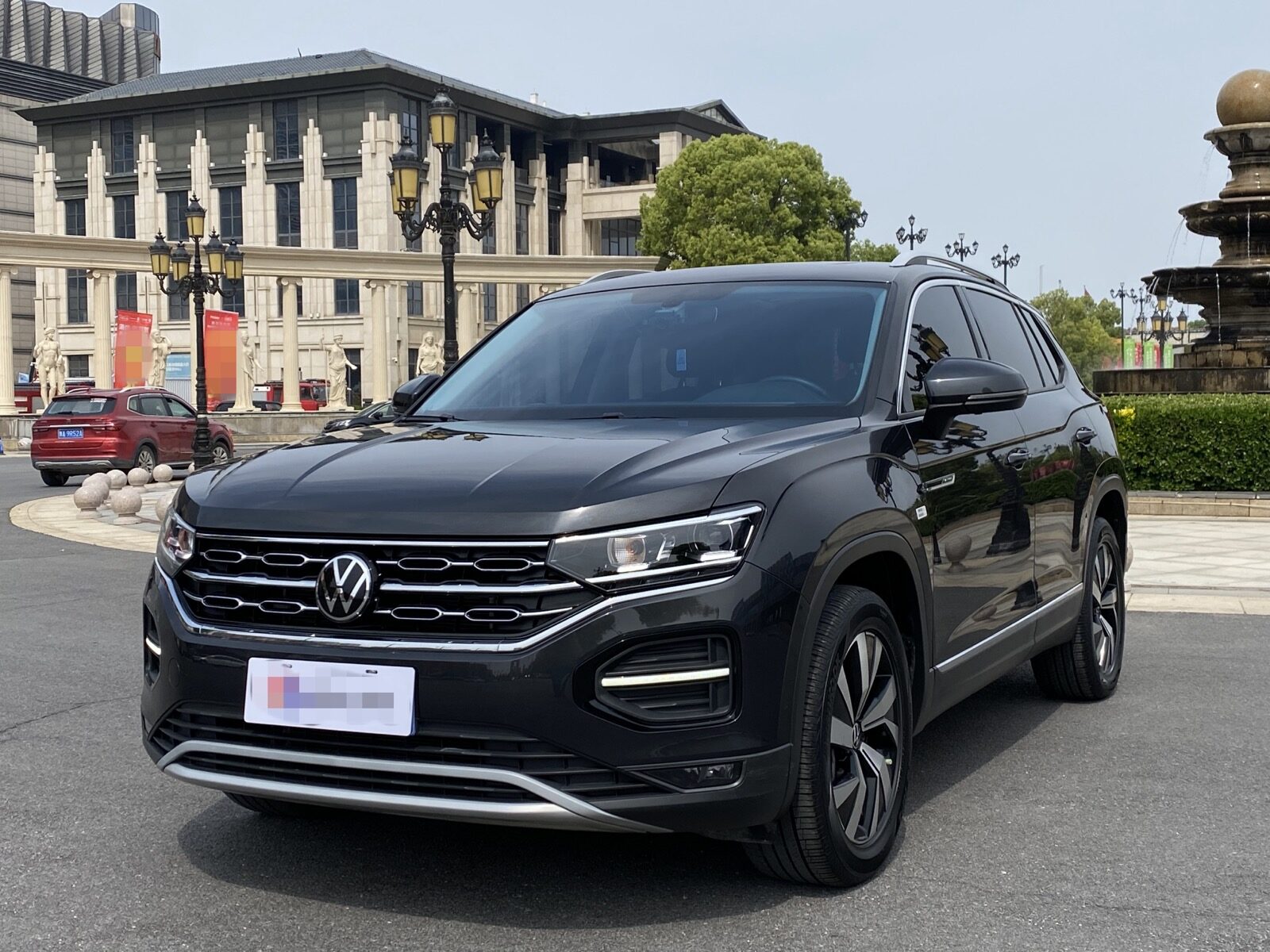
Two cars can wear the same name and be 31,000 yuan and a whole engine apart. A dealer who quotes “Coolray” from a brochure in Lagos or Lima, and a Chinese listing that says 缤越 at RMB 66,800, are often not discussing the same vehicle at all — different displacement, different gearbox, different body length. The name is the least reliable thing in the whole transaction. What follows is how Chinese naming actually works, a worked example priced line by line from Geely’s own configuration sheet, and the four fields you should send a supplier instead of a model name.
The short version
A Chinese domestic listing identifies a car by a string that looks like 2025款 缤越L 1.5TD DCT 星耀. Four separate facts are packed in there: model year, nameplate variant, powertrain, and trim. Your market probably knows that car by one word — Coolray, or X50, or nothing at all, because the version you are looking at was never exported. Matching on the name alone is how buyers end up with a naturally aspirated manual when they paid for a 133 kW turbo.
Verify on four things instead: the VIN, the full Chinese trim string, the manufacturer’s guide price, and the factory build date. Every one of them is printable, checkable, and hard to fudge. We publish all four on every car in our stock.
Why one car ends up with four names
There is no single cause, which is why the problem keeps catching people out. Several different mechanisms produce name collisions, and they stack.
Export rebadging. Geely’s 缤越 is sold as the Coolray in South Africa (launched 19 June 2026), Indonesia (29 July 2026), the Philippines (25 September 2019) and Vietnam (21 March 2025). The same car is the Proton X50 in Malaysia, where it is built under licence, and it was renamed BelGee X50 in Belarus and Russia from August 2023 after starting life there as a Coolray. Five names, one design.
Joint-venture twins. China’s foreign brands operate through two partners at once, and each partner wants its own badge. The Toyota C-HR is a GAC Toyota product; its twin at FAW Toyota is the IZOA (奕泽). The cars share a platform and powertrains — the visible difference is the front bumper grille, horizontal bars on the IZOA against mesh on the C-HR. The same split runs through the Corolla range: FAW Toyota sells the “Prestige” Corolla with a Camry-like face, GAC Toyota sells the “Sporty” Levin (雷凌) using the international hatchback fascia. We currently hold both sides of the C-HR/IZOA pair and both sides of the Corolla/Levin pair.
China-only body variants. The Volkswagen Tiguan L sold in China rides a 2,791 mm wheelbase and measures 4,712–4,720 mm long. The standard Tiguan is 2,681 mm and 4,486–4,509 mm. That is a 215 mm difference in body length hiding behind one nameplate — and outside China the long car is called Tiguan Allspace and comes from Mexico, not Shanghai.
Names that get reused on a different car. This one is the nastiest. The Volkswagen Tayron began in 2018 as a China-only FAW-Volkswagen SUV on the MQB A2 platform, 2,731 mm wheelbase, 4,589–4,595 mm long. In 2024 Volkswagen took the Tayron name global on an entirely different vehicle: MQB Evo, 2,791 mm wheelbase, 4,792 mm long in European specification, sold as the Tiguan in North America and renamed Tayron L back in China. A European buyer researching “VW Tayron” is reading about a car roughly 200 mm longer than the 2022 Tayron in our yard.
Worked example: what “Coolray” costs in China
Geely’s own configurator lists seven current versions under the 缤越 umbrella. They do not form a single ladder — they are two different cars.
| Version (as listed in China) | Guide price | Engine | Gearbox | Length |
|---|---|---|---|---|
| 缤越超能版 超能 MT | RMB 66,800 | 1.5L naturally aspirated, 93 kW / 152 N·m | 5-speed manual | 4,330 mm |
| 缤越超能版 超能 CVT | RMB 73,800 | 1.5L naturally aspirated, 93 kW / 152 N·m | CVT | 4,330 mm |
| 缤越超能版 超能 Max | RMB 78,800 | 1.5L naturally aspirated, 93 kW / 152 N·m | CVT | 4,330 mm |
| 缤越L 超越版 | RMB 84,800 | 1.5TD turbo, 133 kW / 290 N·m | 7-speed wet DCT | 4,380 mm |
| 缤越L 星钻版 | RMB 89,800 | 1.5TD turbo, 133 kW / 290 N·m | 7-speed wet DCT | 4,380 mm |
| 缤越L 星耀版 | RMB 96,800 | 1.5TD turbo, 133 kW / 290 N·m | 7-speed wet DCT | 4,380 mm |
| 缤越L Battle版 | RMB 97,800 | 1.5TD turbo, 133 kW / 290 N·m | 7-speed wet DCT | 4,380 mm |
The 超能版 and the 缤越L share a nameplate, a 2,600 mm wheelbase and a 45-litre tank, and almost nothing else that matters to a buyer. Peak power goes from 93 kW to 133 kW and torque from 152 N·m to 290 N·m. The 超能版 makes its torque high in the range, at 4,000–5,000 rpm; the turbo delivers its 290 N·m from 2,000 rpm, which is the difference between a car that copes with a loaded roof rack on a gradient and one that does not. Kerb weight rises from around 1,255–1,289 kg to 1,320–1,350 kg. The body grows 50 mm. Geely quotes 7.6 seconds to 100 km/h and 6.35 L/100 km WLTC for the turbo; the naturally aspirated car is rated 6.46 L/100 km with the manual and 6.89 with the CVT — so the cheap engine is not even the economical one.
Worth noting for anyone cross-checking against an overseas brochure: the export Coolray powertrains on record are a 101 kW 1.0-litre turbo three, a 132 kW 1.5-litre turbo three, a 135 kW 1.5-litre turbo four and a 190 kW plug-in hybrid. The 93 kW naturally aspirated 超能版 does not appear in that line-up. If your market’s Coolray literature is your reference point, the RMB 66,800 car on a Chinese used listing is not the vehicle you have been reading about. This is the same trap we documented in detail on the BYD Seagull, where the China-market car and the Dolphin Surf sold in Europe have different bodies, batteries and motors.
And the RMB 1,000 gap between the top two
星耀版 at RMB 96,800 and Battle版 at RMB 97,800 sit a thousand yuan apart, which sounds like a badge and a stripe. It is not. Reading Geely’s configuration matrix across the two columns, the Battle picks up a Battle identifier, a carbon-fibre-style body kit, quad exhaust outlets, a large rear wing, carbon-look interior panels, orange sport seatbelts and a suede-wrapped cabin with two-tone suede seats as standard. Three items that cost extra on the 星耀 become standard: the panoramic sunroof, the six-way powered driver’s seat and the red brake calipers.
The part nobody expects is what the Battle gives up. The 星耀’s conventional powered sunroof, its leather sport seats, its black-and-yellow and white-and-blue cabin colourways, and its manual six-way driver’s seat all disappear from the Battle column. So do two options the 星耀 could be specified with and the Battle cannot: heated front seats and the powered tailgate. For a buyer in a hot market the heated seats are no loss. For a buyer supplying a fleet where a powered tailgate was on the spec sheet, RMB 1,000 more buys a car that can no longer be optioned with one.
Both cars run 215/55 R18 tyres, where the 超越版 and 星钻版 use 215/60 R17. That matters when you are pricing a spare and a replacement set for a market with rough roads. And a genuine step change happens one rung lower: the L2 driver-assistance suite arrives on the 星耀版, and the two cheaper 缤越L versions carry conventional cruise control instead. That is the single largest capability jump in the ladder, and it costs RMB 7,000 between 星钻版 and 星耀版 — seven times the gap that gets all the attention.
Older model years still on the market
Used listings pull in versions Geely no longer sells. The 2024 龙腾版 was RMB 83,800; the 2023 铂金版 RMB 89,800 and 钻石版 RMB 95,800; a 2023 1.4T manual 黄金版 sat at RMB 75,800 on a different engine entirely. Two 缤越COOL versions were priced above everything current — RMB 99,800 for the 2022 热擎版 and RMB 103,800 for the 2023 冠军版. A seller quoting “Coolray, RMB 100,000” is not necessarily overcharging; they may be quoting a COOL. Ask which.
Reading a Chinese trim string
Take 2025款 缤越L 1.5TD DCT 星耀 apart and it stops being intimidating.
- 2025款 — model year. Not the build date, and not the registration date. More on this below.
- 缤越L — the nameplate variant. The suffix is load-bearing: L, PRO, PLUS, COOL, MAX and Champion Edition routinely mark different bodies or platforms, not decoration.
- 1.5TD — displacement and induction. T means turbocharged. A bare 1.5L is naturally aspirated. This is the field that moved RMB 18,000 in the table above.
- DCT — gearbox. DCT is dual-clutch, CVT is continuously variable, MT is manual, AT is torque-converter automatic.
- 星耀 — trim level. Chinese trim names are marketing words rather than a numbered hierarchy, and they change between generations. 超越 / 星钻 / 星耀 / Battle here; 铂金 / 钻石 / 冠军 on the older cars. There is no way to rank them from the name alone, which is why the guide price matters.
The guide price is the anchor. It is the manufacturer’s list price, published per version, and it pins down exactly which car is being discussed even when the trim word means nothing to you. It is not the transaction price. Chinese cars sell below list, and by how much varies by city, month and stock position. As an identifier, though, it is unambiguous. Our Jetour T2 engine comparison and BYD Qin PLUS versus Seal 05 pieces work through the same exercise on other models, and the Lynk & Co 900 seating comparison shows how far two versions of one car can diverge.
Name traps sitting in our own stock right now
These are not hypotheticals. Every row below is a car we hold today, and the mismatch is real.
| What the Chinese paperwork says | What your market may call it | Why it matters |
|---|---|---|
| Toyota IZOA (奕泽) | C-HR, or nothing | FAW Toyota twin of the GAC Toyota C-HR; parts catalogues and customs classifications may not recognise the IZOA name |
| Toyota Levin (雷凌) | Corolla | GAC Toyota “Sporty” sibling of the FAW Toyota Corolla; different front-end panels |
| Geely Boyue | Atlas, Proton X70, Azkarra, Emgrand X7 Sport | Six export names across generations and markets; South America knows it as an Emgrand |
| VW Tiguan L | Tiguan Allspace | 215 mm longer than the Tiguan your service manual describes |
| VW Tayron (2022) | Nothing — the global Tayron is a different car | The 2024 global Tayron is a larger vehicle on a newer platform, badged Tiguan in North America |
| ORA Good Cat (好猫) | Funky Cat, GWM Ora 03, GWM Ora | Latin America and Indonesia use Ora 03; Europe changed the name in 2024 |
| BYD Seagull (海鸥) | Dolphin Surf, Dolphin Mini, Atto 1 | The overseas cars are physically different, not renamed |
BYD is worth a separate warning because its naming moves fastest. The Yuan Plus is the Atto 3 abroad; the Yuan Up appears as Yuan Pro, S1 Pro and Atto 2 depending on where you stand. Nothing about the Chinese name predicts the export one.
Model year is not build date
Chinese model years run ahead of the calendar, the way they do everywhere, and the gap is wide enough to change what a car is worth at the border. Of the 54 cars in our stock that carry a documented factory build date, 18 have a model year that does not match the year they were built. A 2024-model-year Seagull in our yard rolled off the line in December 2023. A 2024-model-year Leapmotor C16 was built in March 2025.
This matters because destination countries set age limits on the build date or first registration, not on the marketing year. A car advertised as a 2024 can fail an age rule that a genuine 2024 build would clear. Less often noticed: a car advertised as a 2023 can be newer than the buyer thinks, and quietly worth more.
The tie-breaker is the tenth character of the VIN, which encodes the model year on a fixed cycle: P is 2023, R is 2024, S is 2025 (the letter Q is skipped). On the Seagull above, the VIN reads P and the build plate reads December 2023, and the two corroborate each other against the 2024 sticker. Every car we list carries its VIN in full, so you can run that check yourself before you transfer anything. The rest of what we disclose is set out in our inspection and condition report standard.
What to send a supplier instead of a name
Four fields remove essentially all naming ambiguity from an enquiry:
- The VIN. Seventeen characters, unique to the car, decodes to plant, model year and specification. Nothing else you can ask for is this dense.
- The full Chinese version string, copied character for character — 2025款 缤越L 1.5TD DCT 星耀, not “Coolray top spec”.
- The manufacturer’s guide price for that version. It fixes the trim beyond argument and lets you sanity-check the offer.
- The factory build date from the door plate, which is what your customs authority will read.
For a new-build order the same discipline applies, translated: name the version and the guide price you are ordering against, and get them written into the proforma. Our Coolray order page and the wider new-car export catalogue quote at version level for exactly this reason.
If you are earlier in the process, the 2026 importer’s guide covers the sequence end to end, verifying a Chinese exporter covers who you are actually paying, and the supply-chain breakdown explains why the same car carries four different prices from four different intermediaries. Buyers shipping to West Africa should also read the ports and transit-time guide and container loading maths before committing to a mix of models.
FAQ
Is the Geely Coolray the same car as the Geely Binyue?
Coolray is the export name for the Binyue, used in South Africa, Indonesia, the Philippines and Vietnam among others. But “Binyue” in China covers two distinct vehicles: the 4,330 mm naturally aspirated 超能版 from RMB 66,800, and the 4,380 mm turbocharged 缤越L from RMB 84,800. Only turbocharged versions appear in the documented export powertrain line-up, so a Coolray brochure does not describe the cheapest Binyue.
Why is one Chinese car RMB 66,800 and another RMB 96,800 with the same name?
Because the nameplate is a family, not a car. Between those two prices sit a different engine (93 kW naturally aspirated against 133 kW turbo), a different gearbox (manual against seven-speed dual-clutch), 50 mm of extra body length, roughly 65 kg of weight and an L2 driver-assistance suite. Chinese manufacturers routinely span that range under one badge.
What is the difference between the 星耀版 at RMB 96,800 and the Battle版 at RMB 97,800?
Mechanically nothing — same engine, gearbox and 215/55 R18 tyres. The Battle adds a carbon-fibre-style body kit, quad exhausts, a large rear wing, a suede racing interior and orange seatbelts, and makes the panoramic roof, powered driver’s seat and red calipers standard. It also drops the leather seats, the conventional powered sunroof, the alternative cabin colourways, and the option of heated seats and a powered tailgate. It is a styling package with trade-offs, not a straight upgrade.
How do I tell which trim a Chinese used car actually is?
Match the VIN against the seller’s claim, then ask for the full version string and the guide price of that version. Trim words like 星耀, 铂金 or 冠军 carry no consistent hierarchy across models or model years, so the price is the reliable identifier.
Does the model year on a Chinese listing tell me when the car was built?
No. In our current stock, 18 of the 54 cars with a documented build date were built in a different calendar year from their model year. Check the door-plate build date and the tenth VIN character, because destination age limits are written against the build date.
Why do Toyota and Volkswagen sell two versions of the same car in China?
Both operate two joint ventures simultaneously, and each partner markets its own badge. Toyota’s C-HR comes from GAC Toyota and the near-identical IZOA from FAW Toyota; the Corolla is FAW’s and the Levin is GAC’s. Sheet metal at the front differs, mechanicals largely do not.
Can I use an overseas brochure to specify a car I am buying from China?
Only as a starting point. Export versions frequently differ in engine, battery, body dimensions and equipment from the domestic car with the same name, and in some cases the same name has been applied to a completely different vehicle in a later generation. The Volkswagen Tayron is the clearest instance. Specify against the Chinese version string and VIN, and treat the brochure as a translation aid.